
Many pilgrims who are looking for a famous Vettaikkaran temple in Malappuram assume that there is only one such historic site in the area. However, the region is actually home to two completely distinct Vettaikkaran Temples of Malappuram that frequently get confused with each other.
Located about 20 kilometres apart, the grand royal shrine at Nilambur and the quiet village sanctuary at Thuvvur are both dedicated to the hunter form of Lord Shiva, Vettaikkaran. Even though they share a name and revere the same deity, their histories, local traditions, and festivals are entirely different. Let’s take a closer look at these two unique shrines to clear up the confusion and explore what makes each of them so special.
Thuvvur Sree Vettaikkaran Temple
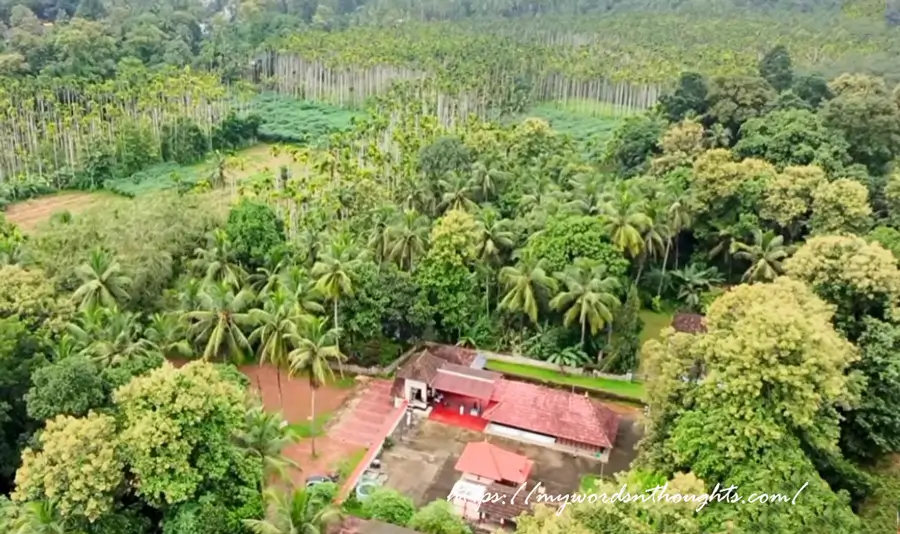
The peaceful and serene village of Thuvvur resides as the central point of Eranad. Lord Shiva guards this village, taking the form of Vettaikkaran, Shiva in hunter form, associated with the folklore and ritual traditions of Malabar. There are many stories and episodes (subplots) connected to the temple. The temple is believed to be 2500 years old.
Legends associated with the Thuvvur temple
Temple legends are associated with the Commanders-in-Chief of Kozhikode Zamorin, known as Trikkideeri Nairs. Lord Shiva takes the peaceful form and resides beside Parvati in this ancient temple, taking the form of hunters while delivering the Pasupata weapon to Arjuna. It’s also said that Kirathamoorthy’s largest stone idol is installed in this temple. For the same reason, the idol is designed in such a way that the lord blesses its devotees who come here to fulfil their wishes.
Once, while Kirata Shiva was returning to Thuvvur from Balussery Fort (Balussery Kotta), Thiruvalayanadu Bhagavathy recognised him and treated him well. On his journey, Chemmaravattathu Ayyappan, Mammavil Bhagavathy and Thirumaanthamkunnu Bhagavathy also extended hospitality. Kirathamoorthy blessed them all and reached the Thuvvur temple, where he resides.
Since then, the Kalampattu rituals conducted for Lord Shiva was slightly modified, as per legends. As instructed by Lord Shiva, Kalampattu was first conducted for those four spiritual powers, and last only for him. It was a kind gesture of Lord Shiva towards these devatas. Anchukalam Paattu was designed after that. First Kalam was for Thiruvalayanadu Bhagavathy, followed by Chemmaravattathu Ayyappan, Mammavil Bhagavathy and Thirumaanthamkunnu Bhagavathy, and the fifth one for Kirathamoorthy.
Nalikeram Eru (Throwing coconut) ceremony for Lord Shiva and other traditional rituals are also conducted only after Kalampattu is conducted for 4 devatas. Interestingly, Kalampattu is not held for Chemmaravattathu Ayyappan in his presiding temple. Through this single story, Sree Vettaikkaran is linked to all the temples near this place. That’s one of the reasons why Vettaikkaran is considered as the Lord (or Master) of this locality and village.
Temple celebrations are distinct and different
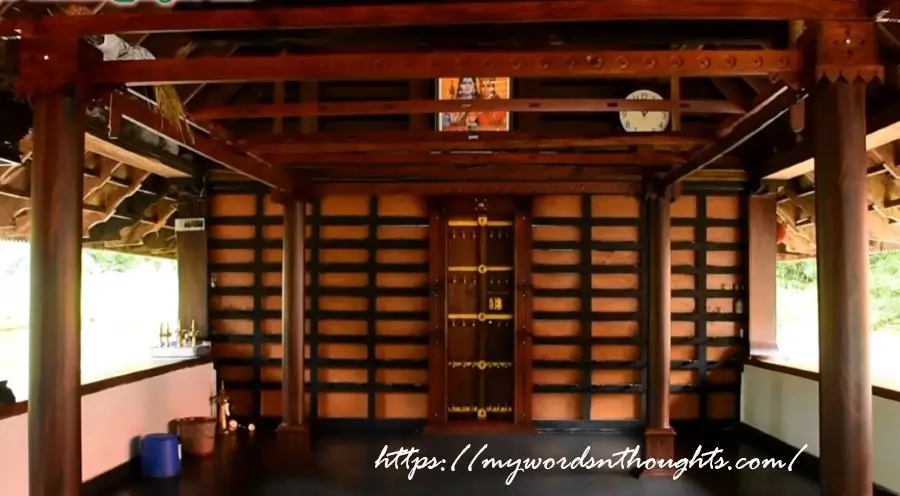
The Prathishta Dinam (Consecration Day) of the temple is celebrated annually on the Anizham asterism in the Malayalam month of Edavam (mid-May to mid-June). Aushakada Kanji is distributed every Karkidakom month, irrespective of caste and religious beliefs. Illam Nira is also celebrated grandly this month.
Ezhuthiruthu of Mahanavami day in Kanni month is conducted every year, where children are introduced to education. Mandalakala Chuttuvilakk (lights lit around the temple) from Vrishchikam 1st, Akhanda Naama Japa Nritha Yajnam and Ayyappavilak Maholsavam are associated with the Sabarimala season.
During Makaram month (mid-January – mid-February), Oottum Paattum is conducted as a part of the annual temple celebrations. Anchukalam Pattu is conducted in 5 days (as described above) dedicated to 5 deities, followed by the coconut breaking ceremony. Kalampattu and Pantheerayiram Thengayeru are conducted by devotees to fulfil their wishes.
Mangalya Pooja and Uma Maheswara Pooja are also conducted in the temple. As Lord Shiva and Parvati reside in Kirada form here, Nalikeram Mutharakunnath is also auspicious. This ceremony is associated with Pantheerayiram Thengayeru (Naalikerameru). Other offerings include Mrithyunjaya Homam, Santhana Labdhi Pooja for parenthood and Wish-fulfilment poojas to overcome obstacles.
For sub-deity Bhadrakali, a hibiscus garland, a silk garment (Pattucharthal), a sweet offering (Kadina Payasam), and Shatrusamhara Pooja are offered. For sub-deity Ayyappa, devotees offer Shanidosha Parihaara Pooja. Karuka Homam, Otta Vigna Nivarana Pooja and Karuka Mala Koottu Ganapati Homam for Lord Ganesha, and Trikala Pooja & Bhagavati Seva for Goddess Durga are also offered.
Pantheerayiram Naalikerameru
Pantheerayiram Naalikerameru, or breaking 12,008 coconuts, is associated with the battle fought between Arjuna and Kirathamoorthy (Hunter manifestation of Lord Shiva). As per legend, Lord Shiva got tired and thirsty after the battle, and to quench the divine thirst, 12,008 coconuts were broken and given to him to drink. It also invokes his peaceful, protective blessings upon the land.
Coconuts for this ritual are offered by devotees. To conduct this ritual, the husk is removed from the coconuts, well-polished and made into a heap like a hill, called Mutharakunnu (The Coconut Mound). Breaking of coconuts (Thengayeru) is conducted by Oracle (Velichapadu), who undergo strict spiritual penance prior to it. Accompanied by Chendamelam, the oracle sits at a place and breaks the coconut on a stone (Mutharakallu) one after one, without changing his position or taking a break.
This ritual is believed to clear away deep obstacles, protect families from negative energy, and bring overall prosperity to the village.
Nilambur Vettayikkaran Temple
The famous Vettayikkaran Temple is located in Nilambur in Kerala’s Malappuram district. The main deity is Shiva, who takes the form of Kiratha Moorthy (the hunter form of Shiva). The deity faces east, and poojas are conducted three times a day. The sub-deities are Ayyappa, Bhagavathi and Shiva. The temple is regarded as the family deity of the famous Nilambur Kovilakam.
The famous “Vettayikkaran Paattu” festival is held from the 20th to the 25th day of the Malayalam month of Dhanu. Members of the Paniya community traditionally brought the flagpole used for the festival. Nambolakkotta, located in Gudalur in Tamil Nadu, was considered the original temple of Vettayikkoru Makan.
There is an old forest route from Nilambur to Nambolakkotta. In earlier times, that temple too was under the control of the Nilambur Kovilakam. According to legend, Vettayikkaran came to Kerala through Balussery Kotta from Nambolakkotta.
Vettayikkaran and Vettayikkoru Makan are considered two different divine concepts. Vettayikkoru Makan is believed to be the son born to Parvathi from Shiva in his Kiratha Moorthy form (Vettayikkaran).
Who is Vettaikkaran, Lord Shiva in hunter form?
Vettaikkaran is strongly associated with the folklore and ritual traditions of the Malabar region of Kerala, and also with certain parts of central Kerala. The name, Vettaikkaran, literally connects to forest culture, hunting symbolism, tribal traditions and warrior folklore.
In the Malabar region, he is usually seen as a local guardian deity who is worshipped by the local people. Shiva takes Kirata (hunter) form to protect people, and folk songs, dance and oracle traditions form integral parts of temple traditions.
The worship is prominent in regions such as Nilambur, Malappuram, Wayanad, Kozhikode, and also regions connected with old feudal Kovilakam traditions in general. The folklore often overlaps with tribal myths, forest-route legends between Kerala and Tamil Nadu and Vettakkorumakan traditions. Read more about Vettakkorumakan – the son of Shiva & Parvati, who is also worshipped as a hunter deity.
Some unique oral traditions such as Vettayikkaran Paattu, ritual hunting symbolism and seasonal folk festivals, are still preserved in many Malabar temples, which may not be found in temples of mid-Kerala and southern parts. Interestingly, these traditions retain a strong local folk character shaped by Malabar’s forest and tribal heritage, rather than purely Sanskritic temple worship, which prevails across Hindu temples of India.




Recent Comments