
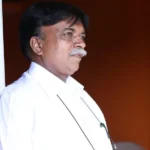
Pandit Dhruvatara Joshi, also pronounced as Prof. Dhruva Tara Joshi and D. T. Joshi, was an exponent of Hindustani Classical Music, representing the Agra tradition of music. He was also trained in Etawah Gharana. Apart from being a Hindustani vocalist, Joshi was also a sitarist, guru and composer. He lived during the period, 1912–1993, and was a leading name in Hindustani music in the 20th century. He composed numerous bandishes under the pen name of “Premrang”. His compositions include many Khayals, Dhrupads, and Ghazals in the Urdu and Hindi languages.
Pandit Dhruvatara Joshi: The Scholar-Maestro of Agra Gharana
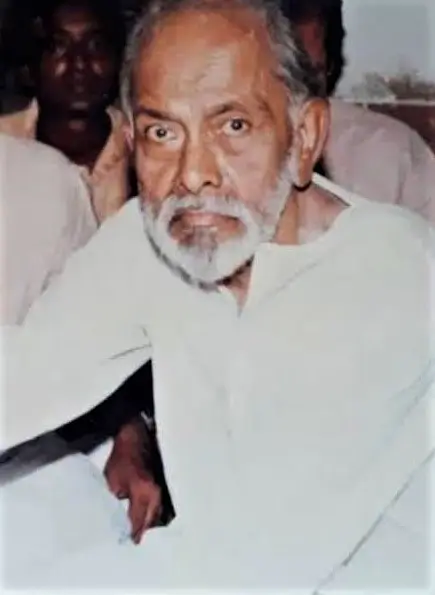
Dhruvatara Joshi was born on 1 October 1912 in Lucknow, Uttar Pradesh, British India. Taradutta Joshi and Dr. Manorama Devi were his parents. His father was a Maharashtrian, and his mother was a Bengali. He took a master’s degree in Philosophy from the University of Lucknow.
He initially took formal lessons in sitar
He moved to Kolkata to take formal lessons in Hindustani music. He met Ustad Enayat Khan in an instrument shop in Kolkata and became a disciple. He learnt sitar in Etawah Gharana, under the guidance of Ustad Enayat Khan. Ustad was so fond of him and considered Joshi his son. Later, Pandit Joshi guided young Ustad Vilayat Khan, the son of his guru, in the string tradition. After Ustaad Enayat’s untimely demise, he permanently shifted to vocal music.
Ustad Enayat Khan recognized Joshi’s brilliant singing voice and urged him to take up vocal music before he passed away. He became a disciple of Aftab-e-Mausiqi Ustad Faiyaz Khan, the foremost vocalist of Agra Gharana, as instructed by his guru before his demise. He took vocal lessons as a “gandabandh shagird”, and slowly learnt Dhrupad, Dhamar, Khayal and Thumri, and became a specialist in all these forms.
He deeply learnt heavy Dhrupad-Khayal architecture that defines the Agra school of singing. While he performed and taught as an Agra vocalist, his deep understanding of the Etawah Gharana’s intricate string music never left him. His illustrious journey as a musicologist and composer is attributed towards his deep knowledge of Etawah Gharana, though he performed Agra traditions as a vocalist. His nom-tom alaps, and his heavy rhythmic command are 100% textbook Agra Gharana.
Dhruvatara Joshi served as Deputy Chief Producer in AIR
Apart from his career as a Hindustani vocalist, Pandit D. T. Joshi also served as the Deputy Chief Producer of All India Radio at Delhi and Lucknow. He orchestrated large musical ensembles during this association. His presentation on Experiments in Orchestration of Indian Music in the AIR music symposia has been preserved by the Ministry of Information and Broadcasting in an edited volume.
Later, Pandit Dhruvatara Joshi joined as the Dean of Indira Kala Sangeet Vishwavidyalaya, Khairagarh (Chhattisgarh), followed by Visva Bharati University, in Shantiniketan, as the Head of the Department of Hindustani Classical Music. He founded the Padmaja Naidu College of Music, at the University of Burdwan.
Composer under the pen name ‘Prem Rang’
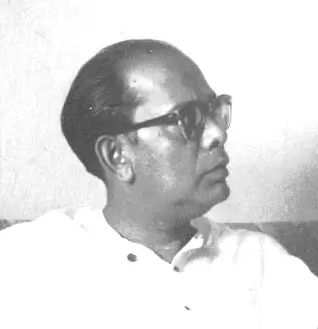
Joshi composed numerous bandishes under the pen name of “Premrang”, which means “Rasik Piya” in Hindi and “Junu Lakhanbhi (Jhunu Lucknowee)” in Urdu. Bin Dekhe Jiera Nahin Maane is one of his popular compositions. His deep knowledge of Etawah Gharana deeply influenced his bandishes
Awards and Honours received by him
Pandit Dhruvatara Joshi was honoured with the Sangeet Natak Akademi Fellowship in 1979 by the Government of India. “Sangeet Acharya” award by Prayag Sangeet Samiti, Fellowship of the Uttar Pradesh Sangeet Natak Academy in 1974, ITC Sangeet Research Academy Award in 1981, and Bhuwalka Award of Sangeet Saurabh in 1984 are other major honours.
Rabindra Bharati University and the University of Burdwan honoured him with Doctor of Letters (D.Litt.). His famous students are Thumri queen Naina Devi, Shampa Reza, Kalyan Mukherjea, Subhra Guha, Mohan Singh Khangura, Tapasi Ghosh, Ustaad Golam Imam, and many more.
Pandit Dhruvatara Joshi died on 28 September 1993 in Bardhaman, West Bengal. Though born in Lucknow, he lived a large part of his life in Bengal. He never permanently returned to settle in Lucknow, though he worked there for the AIR for a while. His permanent life, academic career, and final decades (when he taught numerous disciples) remained deeply rooted in West Bengal. Because his mother was Bengali, he already carried a deep cultural connection to the region.







Recent Comments