
Nilmani Phookan Junior was a celebrated writer from Assam in modern times. He was popular for his poems and was also an academician by profession. In 2020, he won the Jnanpith Award, the highest literary honour of India, for his contributions towards Assamese literature. Sahitya Akademi Award in 1981, Sahitya Akademi Fellowship and Padma Shri by the Government of India in 1990 are other major honours received by him.
Surya Henu Nami Ahe Ei Nodiyedi, Kait, Golap aru Kait, Golapi Jamur Lagna, Kobita and Nrityarata Prithibi are among his noted compilations of poems. From translating tribal poetry to translating poems of Europe, China and Japan into Assamese, he gave magnificent contributions to Assamese literature. He was one of the most profound, avant-garde voices in modern Indian literature
Nilmani Phookan Junior – Assam’s Poet of the Modern Times
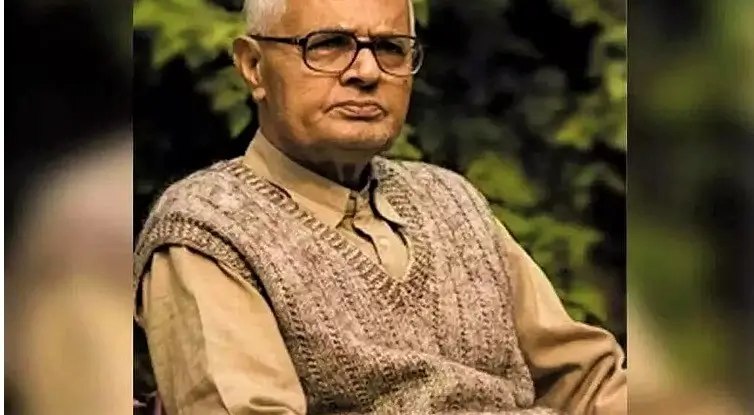
He was born on September 10, 1933, in British India at Dergaon in the present-day Golaghat district. He started writing poetry in the early 1950s. Yet, he took a Master’s degree in History from Gauhati University, years later in 1961. From 1964, he taught history at Arya Vidyapeeth College in Guwahati until his retirement in 1992.
His name is always taken as Nilmani Phookan “Junior”, and this is done to distinguish him from his namesake, Nilmani Phookan (Senior), who was a famous pre-independence Assamese poet, orator, and politician (often called Bagmibar).
His Unique Literary Style and Themes
Nilmani is best remembered for bringing Symbolism and Surrealism into modern Assamese verse. French symbolist poets and impressionist art deeply inspired him. His poetry seamlessly moved between cosmic loneliness, the inevitability of death, the timeless beauty of the Brahmaputra valley, and the silent suffering of ordinary people during times of political violence and social upheaval in Assam. Phookan was also a passionate art connoisseur and critic. Modern Indian art and ancient folk tribal art of the Northeast also became his themes.
Major works of Nilmani Phookan Junior
Surjya Henu Nami Ahe Ei Nodiyedi (1963), Gulapi Jamur Lagna (1977), Kavita (1980) and Nirjanatar Swa (1990) are his major poetic works. In 1981, he won Sahitya Akademi Award in Assamese for his poetry collection, Kobita.
In 2020, he became the third Assamese writer after Birendra Kumar Bhattacharya and Mamoni Raisom Goswami to win the prestigious Jnanpith Award, the highest literary honour of India. The honour was presented to him in 2022 at a historic ceremony in Guwahati due to his ailing health. A few months later in January 19, 2023, he passed away aged 89, leaving behind a legacy that completely reshaped the landscape of Indian poetry.









Recent Comments