
Mamoni Raisom Goswami is the pen name of Indira Goswami, an acclaimed writer belonging to the Assamese language. She was affectionately called Mamoni Baideo (Elder Sister) by her readers. She is a recipient of the prestigious Jnanpith Award in 2000, the highest Indian literary award presented annually by the Bharatiya Jnanpith, for outstanding Indian authors belonging to different languages. She was only the second recipient of this honour from Assam, after Birendra Kumar Bhattacharya.
She was also a social activist, who during 2004–2005, stepped in to act as a crucial mediator between the outlawed militant group ULFA and the Government of India. Through her writings, she always stood as the voice of the marginalized, which includes Hindu widows. She also stood against patriarchal and religious violence.
Indira Goswami alias Mamoni Raisom Goswami – The Celebrated Writer of the Assamese Language
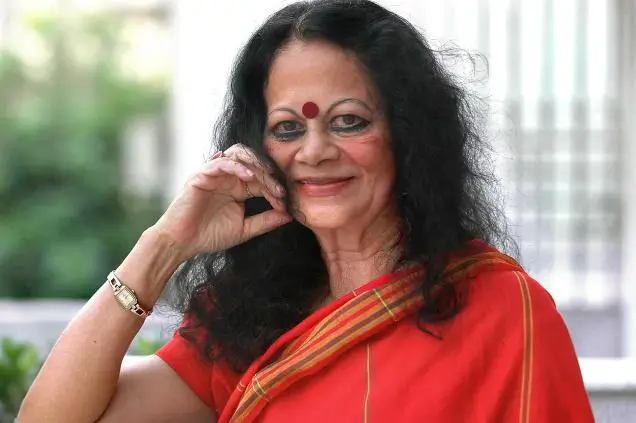
Indira Goswami was born in Guwahati, British India, on 14 November 1942. She belonged to a Vaishnavite Brahmin family, born as the daughter of Umakanta Goswami and Ambika Devi. She completed her school education in her hometown. Later she graduated in Assamese literature at Cotton College in Guwahati and secured a master’s degree from Guwahati University.
In 1962, she published her first collection of short stories
She published her first short stories in a literary journal at the age of 13. She was encouraged by Kirti Nath Hazarika, the editor of the same publication. A few years later, in 1962, Indira Goswami, who was still a student, published her first collection of short stories, titled – Chinaki Morom. She also took the pen name Mamoni Raisom Goswami.
It was writings which brought her back to life from depression
As a child, Mamoni Baideo suffered from depression. It’s mentioned in the opening pages of her autobiography, The Unfinished Autobiography. She made repeated suicide attempts during her youthful days too.
She got married to Madhaven Raisom Ayengar of Karnataka, but lost him 18 months after marriage in a car accident. She slipped into depression once again and even tried to take her life multiple times. They spent their short-lived marriage life in Kashmir and Madhya Pradesh, and those experiences were used in her works later. Her experiences in both these states were used in the novels – Ahiron and The Chehnab’s Current, respectively.
She was brought back to Assam, where she restarted her life as a school teacher and writer. At this point of time, only writing kept her alive. After working at the Sainik School in Goalpara, Assam for some time, she moved to Vrindavan, Uttar Pradesh, to pursue research for peace of mind. Her experiences in Vrindavan were used in her novel, The Blue-Necked Braja (1976). While staying in Vrindavan, she bought a massive volume of Tulsidas’s Ramayana and was involved in Ramayana studies. She later published Ramayana from Ganga to Brahmaputra.
Her relocation to Delhi, where she worked as a professor
She joined the Modern Indian Languages & Literary Studies (MIL) Department at the University of Delhi as a professor of Assamese language. She was guided by her mentor, Prof. Bhabananda Deka, at MIL. Her greatest works were born during her years as a professor at MIL. She used Delhi as the backdrop for her short stories – Hridoy, Nangoth Sohor, and Borofor Rani.
During the later part of her life, Mamoni Raisom Goswami became Head of the MIL Department in Delhi University. Her greatest works – Pages Stained with Blood and The Moth-Eaten Howdah of a Tusker, were also written during her years in Delhi. During those years, joining hands with Assamese writer Arnab Jan Deka, she made attempts to set up a Chair in the name of Assamese saint and philosopher Srimanta Sankardev.
Goswami’s other major works
She wrote the controversial novel The Man from Chinnamasta, which explored the tradition of animal sacrifice in the famous Hindu Shakti temple to Kamakhya. She advocated the abolition of animal sacrifice, which even invited death threats.
Her work, Pages Stained with Blood, told the plight of Sikhs in the 1984 anti-Sikh riots following the assassination of PM Indira Gandhi, and The Moth-Eaten Howdah of a Tusker threw light on the plight of Assamese Brahmin widows in Satra.
Her other major works include – The Man from Chinnamasta, Budhosagor Dhukhor Geisha Aru Mohammed Musa, Udaybhanur Choritro Nangoth Soho, apart from a few short stories and autobiographical works.
Jnanpith Award and Padma Shri – Among the honours she received
The first major recognition she received was the Sahitya Akademi Award for Mamore Dhora Tarowal in 1982. The Sauhardya Award of Uttar Pradesh Hindi Sansthan in 1992, Katha National Award for Literature in 1993 and the most prestigious Jnanpith Award in 2000 are among the more than a dozen recognitions she received during her lifetime. She was also honoured with an honorary doctorate by different prestigious universities of the country.
In 2002, she was honoured with Padma Shri, which she refused to accept. Her readers’ reaction to the announcement was negative. As she was honoured with the highest literary award 2 years prior to it, both she and her readers felt that she was given a lower-tier civilian honour. She also expressed her thoughts that her readers believed a Padma Bhushan or a Padma Vibhushan would have been a more fitting acknowledgement of her towering stature in Indian letters.
Dr. Mamoni Raisom Goswami passed away on 29 November 2011, aged 69. Her death marked the end of an era for both Indian literature and socio-political activism in the Northeast. She had been undergoing intensive medical treatment there for about eight months due to a prolonged, severe illness. She suffered a major cardiac arrest the night before her passing, and ultimately succumbed to multiple organ failure.







Recent Comments