
Rajab Ali Khan was an Indian musician and Hindustani vocalist who lived during the period, September 3, 1874 – January 8, 1959, in Dewas, Madhya Pradesh. He was a rare hybrid genius who lived in the 20th century. He took the structural discipline and complex vocal patterns (taans) of the Jaipur Gharana (which he inherited through Ustad Bande Ali Khan Beenkar) and blended them with the emotional, microtonal note-glides (alapchari) of the Kirana Gharana (which he inherited through Senia-Jaipur master Amritsen).
Ustad Rajab Ali Khan: The Fierce Maverick and Master Vocalist of Dewas
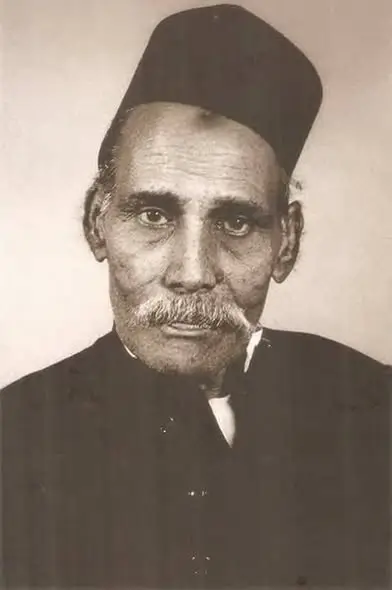
A mix of two styles of singing – A unique breed
He was born into a family with a strong influence on musical traditions. His father, Manglu Khan, who followed the tradition of Bade Mohammad Khan, taught him the initial lessons of Hindustani music. Rajab Ali also took lessons from Bande Ali Khan Beenkar. Therefore, his singing style was a mix of the Jaipur Gharana and Kirana Gharana styles.
He was a court musician of Dewas, Jaipur and Kolhapur. He served as a court musician of Ram Singh II of Jaipur State. Ustad Rajab Ali Khan travelled extensively with his performances. In 1909, Maharaja of Mysore conferred on him the title of Sangeet Ratna Bhushan. In 1954, he received the Sangeet Natak Akademi Award.
A master of Khyal, apart from playing instruments
Ustad Rajab Ali Khan mastered Khyal singing, and also played the musical instruments, Rudra Veena, Sitar, Jaltarang and tabla. Expansive singing full of melodic patterns, and fast and intricate taans are his trademarks in singing Khayal.
His disciples include the legend – Lata Mangeshkar
He trained masters like Nivruttibuwa Sarnaik, Ganpatrao Dewaskar, Krishna Shankar Shukla, Krishnarao Majumdar, and his own nephew, Aman Ali Khan (of the Bhendibazar Gharana). The Nightingale of India, Lata Mangeshkar, briefly took formal taleem (lessons) from Ustad Rajab Ali Khan during her early years!
Alladiya Khan (sarangi player, maternal uncle of Amir Khan) and Jyotiram of the Mewati gharana also learnt from him. Ustad Amir Khan, though not his direct disciple, adapted them into his own world-famous style because he was deeply mesmerised by Rajab Ali Khan’s complex taans.
Colourful Legends: The Ultimate Maverick
He is known as a fierce artist who fearlessly expressed his opinions openly. Once, he visited the royal court of Rampur, whose Nawab was a decent singer himself. But when he arrogantly asked the gathered musicians, “Have you ever heard a professional who can match my skill?”, Ustad Rajab Ali Khan replied that “Even the small children of professional musicians sing better than you.”
Nawab was furious, and he even threatened Khan to shoot him on the spot. But since he was carrying a protective royal letter from the Maharaja of Kolhapur, he protected himself.
As a royal musician associated with different courts, he led a lavish lifestyle. He spent his earnings on lavish hospitality. Once, weirdly, he ordered his servants to buy 10 kilograms of jalebis for the horse, ridden by his guest. The guest arrived at his home, riding on a horse. When the guest replied that a horse eats grass, not sweets, Khan replied, “You happen to be the guest of a great artist—even your horse will eat jalebis here!”
Khan did his last public concert in 1957 in Mumbai. He passed away on January 8, 1959, at Dewas, Madhya Pradesh.
End note: Apart from Kirana Gharana, Khan also fits into the tag – Jaipur Gharana. But this school of music is entirely different from Jaipur-Atrauli Gharana (Which belongs strictly to the Alladiya Khan vocal lineage), and Jaipur Gharana | Senia Gharana (Which belongs strictly to Asad Ali Khan’s instrumental lineage). The lineage of Jaipur Gharana is totally different from these two traditions.







Recent Comments