
Superstitions in Malayalam Cinema – Part 2
This article explores fascinating superstitions followed by nine influential directors of modern Malayalam cinema, from title patterns to astrology beliefs.
Our cinema is deeply woven with beliefs and superstitions, and almost every director has a special liking for something interesting. From the very day a film begins to take shape, this web of beliefs starts forming. Different people believe in different things, and everyone says these beliefs are followed for the film’s success. And no, this is not just about offering rituals or performing poojas. Malayalam cinema has beliefs that go far beyond that—deep-rooted superstitions. Read the first part of the topic here.
For example, there was a strong superstition in Malayalam cinema that if a shot was filmed at the Ooty railway station, the movie would become a super hit. This belief became popular after Kilukkam turned into a massive success. There was also a belief that if the first dialogue of a film began with “Daivame” (Oh God), the film would succeed. There are many people within cinema who survive by selling such beliefs. Some Mollywood beliefs and superstitions are so amusing that they make us laugh, yet even leading directors in the industry follow them.
Today, we are looking at certain beliefs, weaknesses, or sentiments followed by some of our ace directors.
Malayalam Directors’ obsession with film titles – Naming Film titles in unique ways
Priyadarshan – The ‘Am’ Sentiment
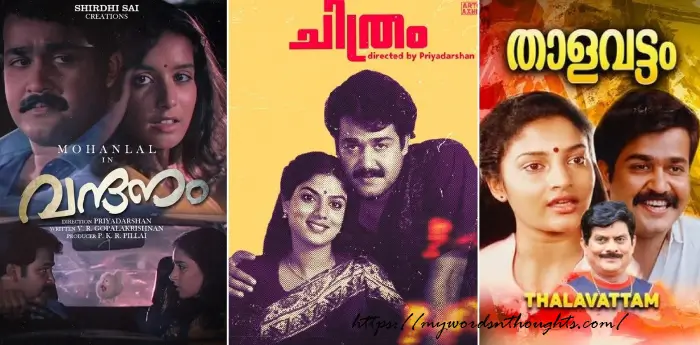
Let us begin with our beloved director Priyadarshan. He is one of the finest directors in Malayalam cinema. Even today, the films he made in the 1990s remain our all-time favourites— the movies we never miss if they appear on television.
Priyadarshan follows a peculiar belief related to his film titles. He has a special sentiment toward the letter “അം” (am). Many may not have noticed this, but most of his films end with “am”. His first script, written for a film starring Lalettan that was never released, was titled Thiranottam. That marked the beginning of Priyadarshan’s connection with “am”.
Later scripts he wrote included Engane Nee Marakkum and Bhookambam. After becoming an independent director, films such as Odaruthammava Aalariyam, Aram + Aram Kinnaram, Dhim Tharikida Thom, and the career-defining Thalavattam followed. The Priyan–Lal combination film Chithram, which broke all box office records and ran in theatres for over a year, also ended with “am”.
Then came Vandanam, Kilukkam, Advaitham, Midhunam, Minnaram, Megham, Kilichundan Mambazham, Vettam, Kancheevaram (Tamil – which won him National award), Arabiyum Ottakavum Madhavan Nairum, Aamayum Muyalum, Oppam, and finally Marakkar – Arabikadalinte Simham. Priyadarshan mostly follows this naming pattern in his Malayalam films. Even in Telugu, the director’s films like Gandeevam and Nirnayam followed the same sentiment. Isn’t this also a superstition?
Perhaps he continued this habit of naming films because many films ending with “am” became hits. His films like Chandralekha, Thenmavin Kombathu , Boeing Boeing and Poochakkoru Mookkuthi, whose names didn’t end with ‘am’ were blockbusters. Interestingly, his Hindi films usually have very short and simple titles – Hungama, Hulchul, Kyon Ki, Muskurahat, Hera Pheri, Dhol, Virasat, Aakrosh, Tezz etc. Most of his Hindi films with long titles were flops (3 or more words). Many of his Malayalam films ending with “am” later failed, yet he continues to follow this pattern even now.
Siddique–Lal and their obsession to English Titles
The Siddique–Lal director duo gifted Malayalam cinema with some of its finest comedy films, and most of their films have been remade to multiple languages. From Ramji Rao Speaking to Kabooliwala, every film they made together was a super hit. Even after they split, most of their individual films were successful, except for a few later works. A striking feature of their films is that all their titles are in English. There isn’t a single Malayalam title among them. Ramji Rao Speaking, In Harihar Nagar, Godfather, Vietnam Colony—all English. Even Kabooliwala is not a Malayalam title.
After separation, Siddique continued this trend: Hitler, Friends, Chronic Bachelor, Bodyguard, Ladies and Gentleman, Bhaskar the Rascal, Big Brother. The only non-English title was Fukri, which is an Urdu word—still not Malayalam. Lal’s directorial films also carried English titles: 2 Harihar Nagar, In Ghost House Inn, Tournament, Cobra, King Liar. The only exception was Tsunami, directed with his son—but even that is a Japanese word. Why such disregard for Malayalam titles? It’s simply belief. Interestingly, the original title planned for Ramji Rao Speaking was Nombarangaley Sullu Sullu. This culture of Malayalam film directors reached the zenith towards late 1980s and early 1990s. Interestingly, it still continues.
Fazil and His Crescent Moon Fascination
Fazil, the director who gave Malayalam cinema classics including Manichitrathazhu, also has a naming sentiment. A closer look reveals that most of his film titles end with the crescent moon symbol (ചന്ദ്രക്കല). This fascination began with Ente Mamattikuttiyammakku. It continued through Nokketha Doorathu Kannum Nattu, Ente Sooryaputhrikku, Manichitrathazhu, Maanathe Vellitheru, Aniyathipraavu, Harikrishnans, Kaiyethum Doorathu, Vismayathumbathu, and Moz and Cat.
I. V. Sasi – The ‘A’ and ‘Aa’ Weakness
Another legendary director with a naming weakness is I. V. Sasi. Many of his films begin with the letters “A” or “Aa” (അ, ആ). Perhaps he believed films starting with these letters would succeed. Films such as Anubhavam, Aalinganam, Ayalkkari, Avalude Ravukal, Amarsham, Angadi, Ahimsa, Ashwaradham, Athirathram, Adiyozhukkukal, Anubandham, Arhatha, Adimakal Udamakal, Aavanazhi, Aaroodam, Aparatha—the list is endless.
Midhun Manuel Thomas – The ‘A’ Sentiment Continues

Sara Arjun as a child artist in Annmariya Kalippilaanu
Film title naming patterns in Kerala cinema still continues among young directors. A new-generation director who follows the same sentiment is Midhun Manuel Thomas. His first film was Aadu, followed by Annmariya Kalippilaanu, Alamara, Aadu 2, Argentina Fans Kaattoorkadavu, Anjaam Pathiraa and Abraham Ozler. Most of them were successful at the box office. All begin with the letter “A” (അ, ആ). His upcoming film is Aaraam Pathiraa and Aadu 3.
Lohithadas – The ‘Am’ Obsession
The late Lohithadas, one of Malayalam cinema’s greatest screenwriters and directors, also had a naming sentiment. He preferred titles ending with “am”. This started with Thaniyavarthanam, followed by Kudumbapuranam, Kireedam, Dasharatham, Jaathakam, Mahayanam, Sasneham, Bharatham, Malayoogam, Amaram, Dhanam, Aadhaaram, Valayam, Kamaladalam, Venkalam, Vaatsalyam, Chakoram, Paathayem, Saadaram, Thooval Kottaram, Sallapam. Nearly 80% of his script names ended with “am”. Even as a director, this habit of naming films continued until Nivedyam – his last work.
Devotion, spirituality, and astrology beliefs of some directors
Lal Jose and Devotional Songs
Director Lal Jose made his debut with Oru Maravathoor Kanavu. From his very first film, he has followed one consistent element—devotion. Most of his films feature devotional songs that cut across religions: Hindu, Christian, and Muslim.
His debut film featured a Christian devotional song set in a church—“Karunamayane…”. His second film Chandranudikkunna Dikhil had a song about Lord Krishna—“Maya Devakikku Makan Piranne…”. A scene involving Sabarimala pilgrimage and the Ayyappa devotional song “Pamba Ganapathi…” sung by M. G. Sreekumar was also included. In Rasikan, the song “Hara Hara Hara Shankara” appeared. All these songs were composed by Vidyasagar and remain popular among devotees even today.
There are many more examples: Achhan Urangatha Veedu had “Zion Manavalan”, Mulla featured “Arumukhan”, Immanuel had “Ennodukoode”, Vikramadithyan included “Allahu”. In Thattinpurath Achuthan, there was “Muthumani Radhe”, and in Nalpathiyonnu, he added “Ayyanayyan”. Lal Jose’s devotion-themed songs go on and on.
Not all films with devotional songs became hits. Interestingly, films like Meesha Madhavan and Classmates, which did not include devotional songs, turned out to be the biggest hits of his career. In Classmates, Radha was featured in Kaathirunna Pennalle song in a romantic mood. Meesha Madhavan movie began with a scene related to Vishu, and the names of the lead characters are Madhavan and Rukmini.
Joshiy – Astrology and Numerology
Joshiy, the master director of Malayalam cinema, is believed to be a strong believer in astrology. Screenwriter Dennis Joseph has spoken about an astrologer who used prediction slips and influenced Joshiy’s decisions—including whether to do a film or not.
Joshiy’s sentiment was not about film titles but about his own name. Until 2001, his name was spelt “Joshi”. After the massive failures of big budget films Dubai and Praja starring the megastars, he took a break. When he returned with Dileep starrer Runway in 2004 after a hiatus, his name was spelled “Joshiy”—and the film became a super hit. From then on, he retained the new spelling for all his movies later.
He also used a specific Surf / Surf Excel font for several film titles after the massive success of New Delhi. It was first done by the designer Gayathri Ashokan, who made foam from this detergent to make the film title. Films like Lelam, Pathram, Vazhunnor, Praja, Dubai, and Salaam Kashmir followed this pattern.
A few more interesting beliefs of directors
Sathyan Anthikad – Announcing the Title Last
Sathyan Anthikad follows a unique belief—he does not announce a film’s title at the beginning. News usually says “a new Sathyan Anthikad film has begun”. Even after shooting ends, reports say “the film is completed” without revealing the title. This practice began after controversies related to Ponmuttayidunna Tharavu. The original title was Ponmuttayidunna Thattan, which led to protests from Thattan community. After that, Sathyan Anthikad began revealing titles only after post-production.
He once tried breaking this belief with Njan Prakashan (2018). Initially announced as Malayali through Facebook, he later came to know about a film of Kalabhavan Mani with same title. To avoid running into legal issues, the director changed the film title. Eventually, Njan Prakashan got released and became a super hit—reinforcing his belief.

A still from Njan Prakashan
Kireedam Unni – Same Title Font for 9 Films
Let me conclude this list with a producer’s name. Producer Krishnakumar, popularly known as Kireedam Unni, followed a superstition of using the same title font from his maiden film, Kireedam for nine films: Kireedam, Malayogam, Aadhaaram, Chenkol, Saadaram, Sallapam, Bhoothakkannadi, Sammanam, Saphalyam. He broke this pattern with Millennium Stars (2000), which failed badly. Despite being a big-budget film with big stars and good music, it didnt connect with audience. This reinforced his belief. After a break of 4 years, he returned with Kusruthi, bringing back the old font.
Final Thoughts on Superstitions in Malayalam Cinema
Our cinema exists in a world intertwined with beliefs and superstitions. From the very moment one begins to think about a film, the threads of these beliefs start to weave. Everyone has their own set of beliefs, all aimed at a single purpose — the success of the film. But this doesn’t stop at simple rituals or offerings. Often, even superstitions that defy logic persist in Malayalam cinema.
As long as these beliefs and superstitions don’t harm others and the cinema, why criticise them? Directors should be free to use their creative and personal freedom to follow what they feel is right. Isn’t that the essence of artistic expression?
You can refer to Wikipedia pages of Priyadarshan, Lohithadas and other directors to get further information on how they named their films.








Recent Comments