
Sujatha Mohan is a well-established playback singer from the South Indian film industry. Predominantly associated with Malayalam, Tamil, and Telugu cinema, she has also lent her voice to Kannada, Hindi, Marathi, and Badaga films. With over 18,000 songs to her credit, Sujatha Mohan is one of the most successful playback singers in the Indian film industry since the 1980s. She has recorded songs with almost all leading composers from the respective film industries, spanning different generations.
Sujatha Mohan completed a glorious 50 years in playback singing in 2025
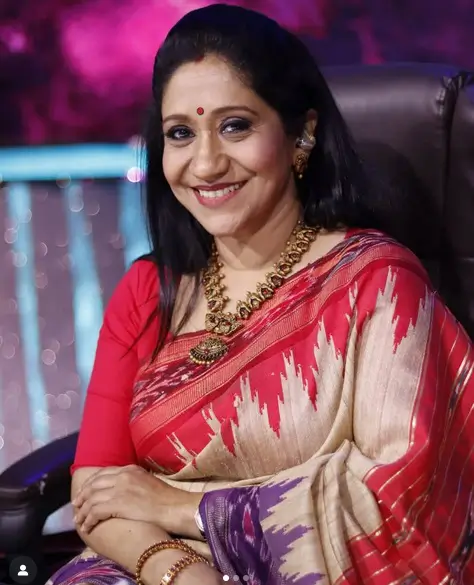
In 2025, she successfully completed 50 years of her playback-singing career. Sujatha Mohan is a recipient of State Awards for Best Playback Singer from both Kerala and Tamil Nadu, winning them three times each. She has also received the Kerala Film Critics Association Award for Best Playback Singer 15 times. Her daughter, Shweta Mohan, is a successful playback singer, as are her cousins G. Venugopal and Radhika Thilak.
Through this post, I shall strictly stick to the biography of this iconic singer, along with a listing of her hit Tamil and Malayalam songs without categorization; otherwise, the article would become too lengthy. Sujatha Mohan has always been among my favourite singers, and listing all her popular songs requires extensive research—a truly herculean task. Nevertheless, I have tried my best to compile a list of more than 100 of her best Malayalam and Tamil songs, composed by different music directors. As I am not proficient in Telugu, I could not include her hit songs from that language. Even so, the list is quite extensive.
Sujatha Mohan’s early life and entry to playback singing in the 1970s
Sujatha Mohan was born into an affluent family with a political background. Her family also had strong connections to the arts. She was born on 31 March 1963 in Kochi as the daughter of Dr. Vijayendran, an anaesthetist. Her grandfather, Paravoor T. K. Narayana Pillai, was the first Chief Minister of the erstwhile State of Travancore–Cochin after independence. Sujatha Mohan lost her father at the age of two, when her mother was just 26. Despite this, her mother did not remarry and dedicated her entire life to Sujatha.
After her father’s death, they moved back to Ernakulam, where young Sujatha grew up with her cousins. Her father’s relatives all lived in Chennai, and during every vacation, they would visit her grandfather’s house there. Her mother was talented in painting and actively involved in Ladies’ Club activities. She sold her paintings and also designed sarees—these were her true passions. Sujatha graduated from St. Teresa’s College, Ernakulam.
Sujatha Mohan formally started learning music at the age of 7:
Her mother was a good singer, though she never revealed it publicly. In those days, there was little support or encouragement, and after marriage she moved to Salem, where she became occupied with family life. She and Girija, the mother of Radhika Thilak, were sisters; hence, Sujatha and the late singer were first cousins. Many of her mother’s cousins were artists, most of them excelling in various dance forms.
Sujatha Mohan’s school headmistress assigned her the task of singing the school prayer song. Her mother’s elder sister, Leela, was the one who encouraged her to participate in singing competitions. During her childhood, while performing on stage in Ernakulam, her mother’s friend Mohanam happened to hear her sing and suggested that Sujatha receive formal music training.
Her gurus were Kalyanasundaram Bhagavathar, Neyyattinkara Vasudevan, and Ochira Balakrishnan. At school youth festivals, she performed light music and poetry recitation. Being selected for Kalabhavan’s children’s troupe, the Balaganamela, proved to be a turning point in her singing journey. Songs such as “Mallike Mallike Malathi Mallike…,” “Innale Nee Oru Sundara Ganamaay En…,” and “Gopurangalil…” were popular at the time. She also served as the anchor of a show of the same troupe. A few years later, she received an invitation to join Dasettan’s troupe and performed her first stage show with him in December 1973. From then on, she became a regular performer in his stage shows.
Story behind her first recording:
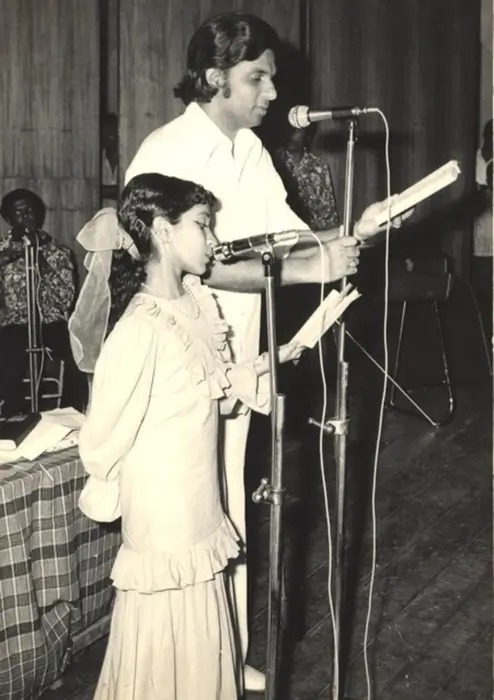
Baby Sujatha was doing live stage shows with K. J. Yesudas in the 1970s
Sujatha Mohan began her singing career as Baby Sujatha in the 1970s and has shared stage space with the legendary K. J. Yesudas in India and abroad. In 1975, at the age of 12, she recorded her first film song. At such a tender age, she effortlessly imbibed the lyrics and rendered the song with ease. That song was “Kannezhuthy Pottuthottu” from the film Tourist Bungalow. M. K. Arjunan gave her the first major break. She later recorded songs for Shyam in Kamam Krodham Moham and for Salil Chowdhury in Aparadhi. M. G. Radhakrishnan allowed her to sing the devotional song “Odakkuzhal Vili,” which went on to become a huge success.
Though she started singing at a younger age, she was less active in recording songs:
Even though she started with light music and classical music, she didn’t sing many film songs then. Going to Chennai for recordings was difficult. First, she was still in school. Second, she was busy with stage programs. The biggest problem was that her mother and she — two women — could not travel alone to Chennai. Even when her grandmother or uncle accompanied them, we slowly stopped pursuing film songs.
Sujatha wasn’t talkative at all back then. She was afraid of people and scared to talk. She was raised very sheltered — especially as a girl growing up without a father. The restrictions were strict.
When going for stage programs, she dressed very simply. She was afraid that if she sang badly, people would say, “Look at how dressed up she came just to sing like this.” That fear disappeared after marriage. Mohan’s presence and support completely changed her life.
Sujatha was married into a musical family

Iniyenthu Nalkanam – A popular song sung by Sujatha Mohan
Soon after her playback singing career took off, Sujatha Mohan married Dr. V. Krishna Mohan in 1981. The couple has one daughter, Shweta Mohan, who is a successful playback singer with many hit songs in Malayalam and Tamil to her credit.
There is a flashback of Sujatha Mohan’s marriage to V. Krishna Mohan. Dasettan’s (K. J. Yesudas) programme at Guruvayur Temple became instrumental in their first meeting. Mohan was present there that day. Sujatha was eight years old then; Mohan was twenty.
After singing on stage with Dasettan, she apparently went and stood near Mohan. The next day, when they went for darshan, Mohan still fondly recalls that she unknowingly held his hand while walking. Mohan’s mother, Radhamani Unni Nair, was a disciple of Chembai Swamy. His father, K. C. Unni Nair, was a lawyer. Mohan had learned music for some time under Palakkad C. K. Ramachandran Sir. His sister studied music at Chembai Kalakshetra.
Their wedding story is quite interesting. Mohan’s mother was a devoted admirer of the great musician D. K. Pattammal. Since Pattammal did not have a free date to perform, she insisted on postponing the wedding. Finally, after a year of waiting, the wedding took place, marked by a grand concert by Pattammal herself. That was how deeply music was revered in that family.
Yesudas and the Matchmaking:
Chembai Swamy once told Mohan’s mother, “Why not consider Sujatha, who sings with Das, for Mohan?”
Mohan’s mother was shocked and replied, “But she is very young, Swamy!”
Swamy laughed and said, “A young girl will grow up.”
Mohan’s father, Advocate Unni Nair, was an organiser of music programmes in Palakkad. Whenever Yesudas came to Palakkad, he would stay at Mohan’s house. During those visits, Mohan’s mother would keep special gifts for Sujatha —silk skirts and idols of deities.
When it felt like the “little girl had grown up,” they checked our horoscopes. Mohan’s family were ardent devotees of Sai Baba. When they prayed to Baba about the marriage, the answer came: “No need to check horoscopes. Everything will be auspicious. Go ahead.”
Their marriage finally happened in 1981:
Dasettan conveyed this to Sujatha’s mother. Though the 12-year age gap was a concern, the family’s deep love for music mattered more. Her mother herself did not believe much in horoscopes. Her parents’ marriage had been arranged after checking everything, yet her father passed away early—perhaps that pain influenced her thinking. She got married at eighteen.
Mohan had completed his MBBS and was preparing for his postgraduate studies. He later went to Mumbai to specialize in Paediatrics, while Sujatha Mohan stayed back to complete her graduation in Arts. She later suffered two miscarriages and even slipped into depression before she was blessed with her only daughter, Shweta Mohan.
Sujatha Mohan’s career after daughter’s birth:
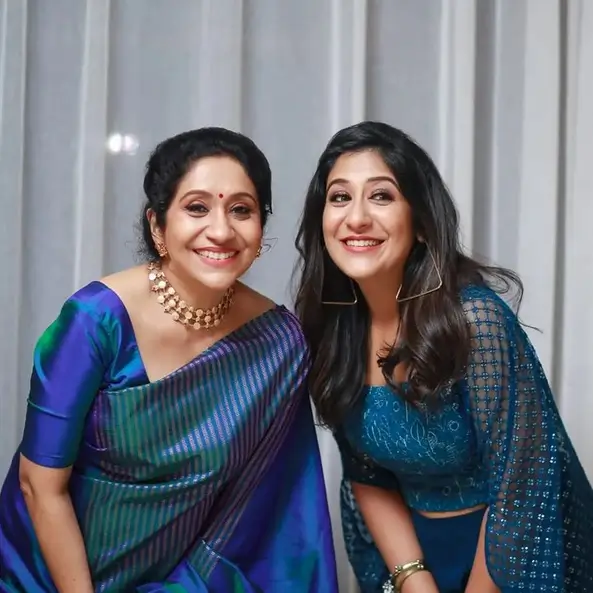
Sujatha with her daughter Shweta, an established playback singer of present times
During her pregnancy, she continued singing, and later, while on bed rest, she learned Hindustani music at home. After Shweta was born, she would sing to her regularly. Although she took a short break from the industry, Priyadarshan insisted that she return to singing.
“Kattanaadan Ambadiyil – Naaleyanthi Mayangumbol…” was the first song she recorded after Shweta’s birth. During that recording, she met M. G. Sreekumar for the first time. The song “Doorekizhakkudikkum…” from Priyadarshan’s Chithram cemented both their careers. Songs from the director’s films Oru Muthassi Kadha and Vandhanam further boosted their careers. In the early 1990s, she gradually began to gain a firm foothold in the industry.
Her second innings during the 1990s was truly glorious

Pudu Vellai Mazhai alongside Unni Menon -The turning point of Sujatha’s singing career
Though she was active in singing from the early 1980s, she had only a few hit songs to her credit. In her second innings, Sujatha Mohan became conscious of being a professional singer. As Janaki and Susheela significantly reduced their singing in the beginning of the 1990s, she felt she had to stand alongside Chithra by singing differently. Right from the beginning of the 1980s, her contemporary singer Chithra was her best contender.
Tamil Nadu state awards:
In the early 1990s, A. R. Rahman helped her discover and understand her vocal strength. A voice that had seemed less prominent until then became powerful thereafter. Songs such as “Aathangara Maname…,” “Netru Illatha Mathram,” “Pudhu Vellai Mazhai,” and “En Veetil Thottathil” became her signature numbers. Subsequently, composers like Vidyasagar, Ouseppachan, and M. Jayachandran used her voice beautifully.
Sujatha Mohan won the Tamil Nadu State Award for the first time in 1993 for the songs “Netru Illatha Mathram” and “En Veetil Thottathil,” both composed by A. R. Rahman. She won the award for the second time in 1996 for “Poo Pookum Osai” from Minsara Kanavu, composed by A. R. Rahman, and “Rukku Rukku” from Avvai Shanmugi, composed by Deva. She received the award for the final time for “Un Samayil Arayil” from Dhill (2001), composed by Vidyasagar. In 2009, the Government of Tamil Nadu honoured her with the prestigious Kalaimamani Award.
Comparisons with Chithra – The best among her contemporaries
Comparisons have always existed. It happened in previous times and will happen in future generations too, across different music industries. Today, they happen mostly among fans on social media. But as they grew older, Chithra and Sujatha Mohan have become closer. The truth is—they both grew because they had each other to stand against. Both have their own signatures in their renditions, and music lovers accepted them. Here is the list of 100 best Malayalam songs of Chithra, and also her best Bollywood songs. Have a look.
Sujatha Mohan – Some interesting and less-known facts
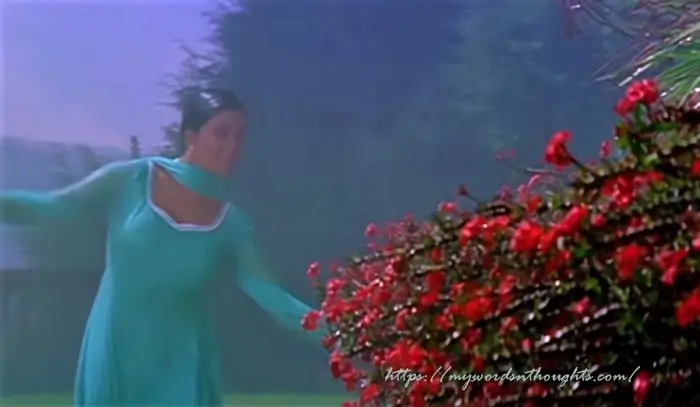
Pranayamani Thooval from Azhakiya Ravanan – The first Malayalam song which earned her recognition at the Kerala state awards
1. Sujatha holds the distinction of breaking K. S. Chithra’s record of receiving the Kerala State Award for Best Playback Singer consecutively for 11 years, from 1985 to 1995, during which Chithra won the award nine times. Sujatha broke this record in 1996 by winning the award for the first time for “Pranayamani Thooval” from Azhakiya Ravanan, composed by Vidyasagar. She later received the award twice more—once in 1998 for “Varamanjaladiya Raavinte” from Pranayavarnangal, composed by Vidyasagar, and again in 2006 for “Bansuri Sruthi Pole” from Rathri Mazha, composed by Ramesh Narayan.
2. She has a 12-year age gap with her husband Mohan. His family’s musical background was the main reason behind their marriage. After marriage, they first visited Idukki, where they had relatives. Then they went to Thirukazhukundram near Chennai. First foreign trip after marriage was to Bahrain for a music programme.
3. Mohan also became a stage anchor during US shows. For their first show together, they sang Onnanam Kunninmel…” together, on Yesudas’ special insistence. Later, they sang many duets, including “Sagar Kinare…”.
4. Though Sujatha Mohan remained in the industry for 2 decades, it was Vidyasagar who identified Sujatha’s real potential. Their association began in the mid-1990s and for the next 1 decade, they recorded some of the best songs of their respective careers. It was Vidyasagar’s song which helped her to break Chithra’s supremacy in state film awards and gifted her the first award for best playback voice.
5. Sujatha Mohan is the female voice behind the hit remix song, Bheegi Bheegi Raaton Mein, alongside Srinivas. Famous models, Niketan Madhok and Anupama Verma, were featured in this very popular Indi-pop song of the 90s. During the 1990s, she lent her voice to the Bollywood chartbuster “Ishq Bina” from Taal (1999).
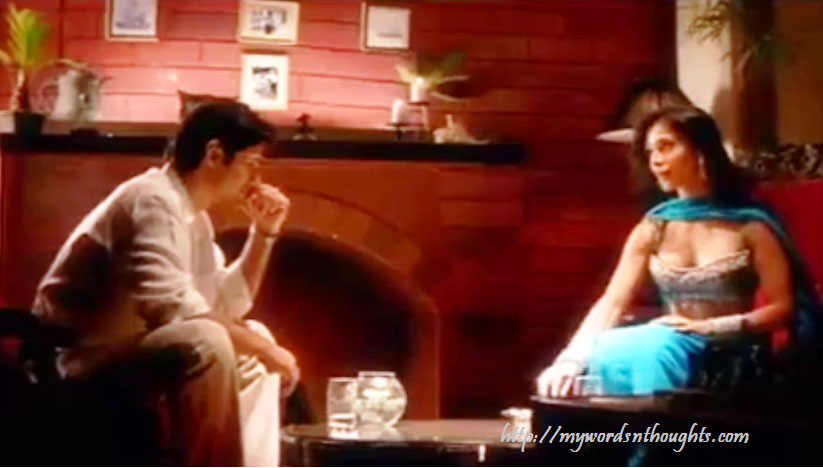
Bheegi Bheegi Raatom Mein Remix – The most popular non-filmy song of South Indian singers Srinivas and Sujatha
6.“Rafta Rafta” from Hulchul, featuring Akshaye Khanna and Kareena Kapoor, is one of her Bollywood chartbusters. The song was composed by Vidyasagar. Sujatha Mohan sang its original version,“Aasai Aasai” from Dhool (2003), alongside Shankar Mahadevan, though the antara differs. She also sang “Karimizhi Kuruvi” from the Malayalam filmMeesa Madhavan (2002), composed by the same music director, who reused its popular introductory music in both the Tamil and Hindi versions. Notably, her top two Bollywood songs were filmed with Akshaye Khanna.
7. While performing in State-level school youth festivals, she lost first prize in poetry recitation to a girl from Thiruvananthapuram. She is the singer Arundhati, who has rendered her voice for a few Malayalam songs.
8. When Sujatha Mohan started singing in stage programs, some people commented, “She is making money by making her daughter sing.” When this reached her mother’s ears, she made a firm decision — she would not accept payment even for a single song. From then until Sujatha’s marriage, she never accepted even one rupee as payment for singing in stage programs.
Sujatha Mohan – My favourite Malayalam songs
The majority of my favourite songs by her were composed by Vidyasagar, most of which were released between 1996 and 2005. In other words, Sujatha Mohan truly gave her best during her second innings. The same is true for singer Jayachandran, whose career was also revived by Vidyasagar.

Junile Nilamazhayil from Nammal Thammil – Sujatha’s duet with Yesudas
- Kandaal Chirikkaatha – Oru Muthassikkadha [1988]
- Ponmuraliyoothum – Aryan [1988]
- Doore Kizhakkudhikkin – Chithram [1988]
- Theeram Thedum – Vandanam [1989]
- Anthiponvettam– Vandanam [1989]
- Pallitherundo – Mazhavil Kavadi [1989]
- Orikkal Nee Chirichal – Appu [1990]
- My Name is Sudhi – Ey Auto [1990]
- Swargangal Swapnam Kaanum – Malootty [1990]
- Mounathin Idanazhiyil – Malootty [1990]
- Anthiveyil Ponnuthirum – Ulladakkam [1991]
- Neerppalunkukal – Godfather [1991]
- Neela Kuyile – Adwaitham [1992]
- Kunu Kune – Yoddha [1992]
- Maaliniyude Theerangal – Gandharvam [1993]
- Thumpi Penne – Dhruvam [1993]
- Sooryanaalam – Thacholi Vargheese Chekavar [1995]
- Pranayamani Thooval – Azhakiya Raavanan [1996]
- Kaakka Karumban – Ee Puzhayum Kadannu [1996]
- Varamanjalaadiya – Pranayavarnangal [1997]
- Ennum Ninne Poojikkam – – Aniyathipravu [1997]
- Innale Mayangunna Neram – Chandralekha [997]
- Ellam Marakkam – Punjabi House [1998]
- Kuppivala – Ayaal Kadhayezhuthukayaanu [1998]
- Ethrayo Janmamaayi – Summer in Bethlehem [1998]
- Oru Poovine Nishaashalabham – Meenathil Thaalikettu [1998]
- Naadodipoothinkal – Usthaad [1999]
- Prayam Nammil – Niram [1999]
- Mizhiyariyathe – Niram [1999]
- Oru Muthum Thedi – Independence [1999]
- Manju Peyyana – Chandranudikkunna Dikkil [1999]
- Oru Kunju Poovinte – Chandranudikkunna Dikkil [1999]
- Bombaattu Hudugi – Chandranudikkunna Dikkil [1999]
- Ambadi Payyukal – Chandranudikkunna Dikkil [1999]
- Iniyenthunalkanam – Life Is Beautiful [2000]
- Manimuttathaavani Panthal – Dreams [2000]
- Pranayikkukayayirunnu Naam – Manasil Oru Manjuthulli [2000]
- Muthum Pavizhavum – Darling Darling [2000]
- Dhwadasiyil – Madhuranombarakattu [2000]
- Munthirichelulla – Madhuranombarakattu [2000]
- Oru Simhamalayum Kaattil – Thenkasipattanam [2000]
- Sharike Ninne Kaanan – Rakkilipattu [2000]
- Thathamma Peru – Dhosth [2001]
- Marannittumenthino – Randaam Bhaavam [2001]
- Manikuyile – Valkannadi [2002]
- Enikkum Oru Naavundenkil – Oomapenninu Uryaadachekken [2002]
- Karimizhi Kuruviye – Meesa Madhavan [2002]
- Ente Ellamellamalle – Meesa Madhavan [2002]
- Aarum – Nandanam [2002]
- Oru Mazhapakshi Padunnu – Kuberan [2002]
- Poove Oru Manimutham – Kaiyethum Doorath [2002]
- Chilamboli Katte – CID Moosa [2003]
- Va Va Va Vave – Ene Veed, Apponteyum [2003]
- Oru Poo – Swapnakoodu [2003]
- Shilayil Ninnum – Chronic Bachelor [2003]
- Swayamvara Chandrike – Chronic Bachelor [2003]
- Aaroral – Pattalam [2003]
- Paikkurumbiye Meykkum – Gramophone [2003]
- Kallai Kadavathu – Perumazhakaalam [2004]
- Muthe Ninne – Amrutham [2004]
- Thotturummi Irikkan – Rasikan [2004]
- Chanthu Kudanjoru – Chanthupott [2005]
- Aaraarum Kaanaathe – Chandrolsavam [2005]
- Munthiri Padam – Kochirajavu [2005]
- Kuzhaloothum Poomthennale – Bhramaram [2009]
- Muthe Muthe – Kana Kanmani [2009]
- Junile Nilamazhayil – Nammal Thammil [2009]
I have added a good list of songs from my memory. I may add more songs later.
Sujatha Mohan – Tamil Film Hits
I have noticed one strange thing. This is more or less applicable in Malayalam movies too, but is more prominently visible in Tamil films. Sujatha Mohan mostly sings a single track for an entire album, and in most cases, that song is a hit. In Roja, Rahman reserved one duet for Sujatha and wisely used her humming voice for another song. Her humming voice was wisely used by Vidyasagar too in many films. For instance, in the entire song, Oru Kunju Poovinte from Chandranudikkunna Dikkil, she hums only. But it’s so impactful. Sujatha Mohan sang her most beautiful songs for Rahman, followed by Vidyasagar and Deva, who used her voice and potential in their compositions.

Nenjodu Kalanthidu from Kadhal Konden
- Puthuvellai Mazhai – Roja [1992]
- Kadhal Rojave – Roja [1992]
- Aathangara Maname – Kizhakku Cheemayile [1993]
- En Veetil Thottathil – Gentleman [1993]
- Netru Illatha Mathram – Pudhiya Mugam [1993]
- Poraale Ponnuthayi – Karuthamma [1994]
- Katthirikka Katthirikka – Duet [1994]
- Thillana Thillana – Muthu [1995]
- Thamarai Poovukum – Pasumpon [1995]
- Rukku Rukku – Avvai Shanmugi [1996]
- Kadhala Kadhala – Avvai Shanmugi [1996]
- Mel Isaiyae – Romeo [1996]
- Sollamale Yaar Paarthathu – Poove Unakkaga [1996]
- Chittu Chittu Kuruvikku – Ullathai Allitha [1996]
- Rosappu Chinna Rosappu – Surya Vamsam [1997]
- Poo Pookkum Asai – Minsara Kanavu [1997]
- Oru Pattam Poochi – Kadhalukku Mariyadhai [1997]
- Chandiranai Thottathu Yaar – Ratchagan [1997]
- Poovukkul Olinthirukkum – Jeans [1998]
- Garuda Garuda – Natpukkaga [1998]
- Sotta Sotta – Taj Mahal [1999]
- Mudhal Murai Killi Parthen – Sangamam [1999]
- Oru Poiyavadhu – Jodi [1999]
- Un Per Solla – Minsara Kanna [1999]
- Nilave Vaan Nilave – Maayi [2000]
- Un Samayil Arayil – Dhill [2001]
- Desingu Raja – Dum Dum Dum [2001]
- Manjal Poosum Vaanam – Friends [2001]
- Sundari – Kannathil Muthamittal [2002]
- Kaadhal Pisase – Run [2002]
- Sakalakala Vallavane – Pammal K. Sambandam [2002]
- Ennai Thalattum – Unnai Ninaithu [2002]
- Sil Sil – Unnai Ninaithu [2002]
- Theendi Theendi -Man Bala [2002]
- Aasai Aasai – Dhool [2003]
- Maan Kuttiye – Priyamaana Thozhi [2003]
- Azhagooril Poothavale – Thirumalai [2003]
- Silendra Theepori Ondru (Title Track) – Thithikudhe [2003]
- Nenjod – Kaadhal Kondein [2003]
- Rangola Ola – Ghajini [2005]
Here, I conclude the musical journey of the legendary singer Sujatha Mohan, who gave some of the most memorable songs from the 1980s until the late 2000s. As she completes 50 years of singing, it’s my humble tribute to Sujatha Mohan, and I wish her all the best for the musical journey for many years to come.






Recent Comments