
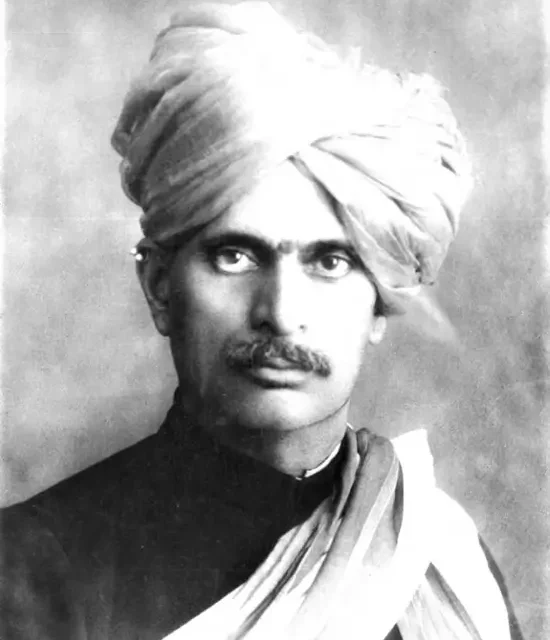
Pandit Krishnarao Shankar Pandit (July 26, 1893 – August 22, 1989) was a towering titan of Hindustani classical music. Often referred to by the title Gaan Maharishi, he is universally revered as one of the most definitive and influential doyens of the Gwalior Gharana in the 20th century. He belonged to the fourth generation of the 6-Generation Lineage of the Gwalior Gharana. He was a recipient of Padma Bhushan, Sangeet Natak Akademi Award, Tansen Award, Sangeet Bhishmacharya, Akashwani Award and many other honours.
Krishnarao Shankar Pandit – The Star Icon of Gwalior Gharana
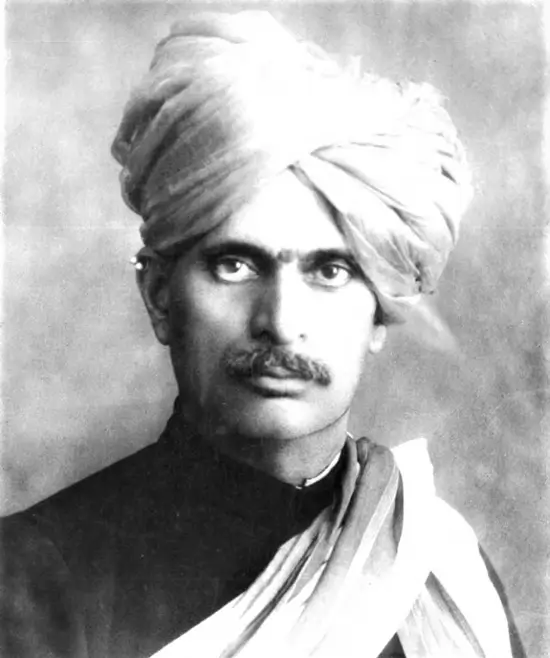
Pandit Krishnarao Shankar Pandit was born on July 26, 1893, in Gwalior, British India. His father, Shankarrao Pandit, who trained him at an early age, was a prominent figure of the Gwalior Gharana. He also received training from Nathu Khan and Nissar Hussain Khan. He learnt Khyal, Tappa, Tarana and Layakari genres of vocal renditions during his initial days.
To give his voice a massive three-octave range and unmatched breath control, his learning was not confined to the 4 walls. Instead, he was trained intensively in wrestling, gymnastics, yoga, and swimming to build sheer physical stamina. Pandit also practised his swara and laya exercises in the dense woods before dawn, which conditioned his skills and prepared him a lot for his illustrious musical journey later.
Pandit made his stage debut at the age of 11
Krishnarao Shankar Pandit gave his first concert when he was only 11 years old. After three years, he started music as his profession. In 1914, at the age of 18, he founded Shankar Gandharva Mahavidyalaya, a music college, where numerous students studied music. Six years later, he was appointed as the State Musician of the Satara Principality under Maharaja Madhavrao Scindia. But he preferred to return to his hometown, where he concentrated on his musical journey.
Pandit has been credited with designing the curriculum for vocal and instrumental music
He wrote eight textbooks and several articles, which were used for academic purposes. He also trained numerous aspirants, including his sons, Laxman Krishnarao Pandit and Chandrakant Pandit, and Meeta Pandit, his granddaughter. Pt. Laxmanrao Pandit, and Pt. Sharatchandra Arolkar are also his disciples.
He personally designed a simplified, independent music notation system for the curriculum. His performances have been archived, too. He was a purist who strictly followed and propagated the Khyal tradition of Gwalior Gharana.
Awards and recognitions received by Pandit
He received Padma Bhushan in 1973, Sangeet Natak Akademi Award in 1959 and Tansen Award in 1980. He was also a recipient of Shikhar Samman, Gaan Maharishi, Bhuwalka Award, Swar Vilas and countless honours and awards. He served as a producer at All India Radio and Doordarshan. He passed away in his hometown on 22 August 1989, aged 96.
The Unbroken 6-Generation Lineage of the Gwalior Gharana
1st Generation: Pandit Vishnupant Chattra (The pioneer who brought the roots of this classical style into the family lineage).
2nd Generation: Pandit Shankar Rao Pandit (A towering figure who solidified the Gwalior style in the late 19th century).
3rd Generation: Pandit Krishnarao Shankar Pandit (Krishnarao himself—a legendary doyen who was awarded the Padma Bhushan for his unmatched mastery).
4th Generation: Pandit Laxman Krishnarao Pandit (His son—the current living maestro who was trained by him).
5th Generation: Tushar Pandit (His late grandson, who was originally being groomed as the 5th generation successor before his tragic accident).
6th Generation: Meeta Pandit (His granddaughter, trained by himself, who stepped up to ensure the 6th generation of her family’s musical DNA did not fade away).
Meeta Pandit published a book, titled “India’s Heritage of Gharana Music: The Pandits of Gwalior” in 2018, based on the life of the Pandit lineage.








Recent Comments