
Thalassery is a small town on the Malabar Coast in Kannur district, famous for its wide variety of dishes and a few traditional art forms. Thalassery also holds an important place in the historical and cultural records of Kerala.
When it comes to Thalassery cuisine, it has some distinct vegetarian and non-vegetarian dishes that are popular across Kerala. To mention a few – Thalassery Dum Biryani, Unnakkai, Thalassery Mussels Biryani, Malabar Beef Roast, Chatti Pathiri, Ney Pathiri, Orotti Pathiri, Kalathappam, Arikadukka, Mutta Masala, Kalmaas, Chicken Kondattam, Sulaimani tea, Kozhikaal, etc.
Unlike biryanis available in other parts of the world, Thalassery uses small-sized Kaima rice (Jeerakasala) to prepare biryani. This practice is common throughout the Malabar region. Also read: Kuttichira Food Trail: Exploring Kozhikode’s Hidden World of Traditional Delicacies.
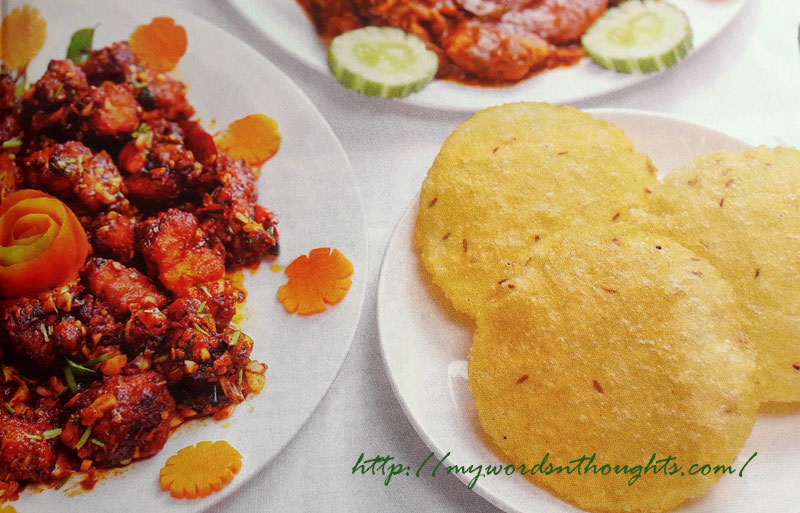
Thalassery Ney Pathiri and Chicken Kondattam
Thalassery Cuisine – A Blend of History, Culture and Local Flavours
If we start a discussion about Thalassery cuisine, its taste is as vast as the ocean, and we may not know where to begin. Apart from Indian varieties, especially Kerala cuisine, Thalassery cuisine also takes inspiration from Mughal, Arabian, Persian, and even European dishes.
Let us begin with the sea bridge (Kadal Paalam) of Thalassery, which was built in earlier times for transporting goods to other parts of the world. The town slowly developed around it. Thalassery was once a small coastal village. The entire landscape changed after the East India Company arrived and built a fort. With the arrival of foreigners, it turned into a harbour town and a commercial hub of Kerala.
At one point, the government decided to demolish the 100-year-old bridge of Thalassery, which is deeply linked to the town’s history and culture. However, it faced strong opposition from the residents, and the decision was later withdrawn. During the hot summer months, many people find this bridge the best place to spend the night.

Thalassery’s trademark Dum Biryani, prepared using Jeerakasala rice
Pulivaaral, Irachi Choru and a few more Thalassery dishes

Kolmaas
Earlier, only traditional Thalassery dishes were available in restaurants. But with the passage of time and increasing competition, many restaurants have added Chinese and North Indian dishes to their menus. Now, local restaurants offer a wider variety of items. Irachi Choru (meat rice) may not look as appealing as other biryani dishes. But when it comes to taste, it can give tough competition to its counterparts.
The afternoon scene is filled with the aroma of Thalassery snacks

Flowerpot
In the afternoons, restaurants across the town are busy preparing snacks for the evening. Thalassery has countless special snack items, suitable for every celebration, festival, and tradition. Vattipathiri, Chatti Pathiri, Kaaykrotta, Unnakai, Irachipathil, Turkipathil, Pettipathil, Carrot Pola, Meenada, Mutta Mala, Flowerpot – and the list of Thalassery snacks is never-ending.
When it comes to restaurant snacks, different items are prepared each day. The snacks sold today may not be available tomorrow. Still, many restaurants offer at least 10 varieties daily. Along with regular tea and coffee, Sulaimani and fresh juices are also available. Also, read about the interesting stories of Sulaimani.
Thalassery is Famous for Mussel Dishes
Ari Kadukka is one of the most popular mussel dishes served in Thalassery Cuisine, apart from the usual mussel fry. Mussels are locally called Kallumakka. To prepare Ari Kadukka, the mussels are first cleaned and marinated with masala. They are then coated with rice flour mixed with fresh cumin and steam-cooked. After that, they are coated with masala once again and deep-fried. The spicy masala, combined with the distinct taste of cooked mussels and the rice coating, makes Ari Kadukka a unique dish.
Masala-fried boiled eggs and Kozhikaal are also part of Thalassery cuisine. Kozhikaal literally means “chicken leg,” which may give the impression that it is a chicken snack. But it is not. It is made from tapioca, cut into thin sticks similar to French fries. A handful of these tapioca sticks is dipped in batter and deep-fried in hot oil. Chicken Kondattam and Ney Pathiri together make a unique and tasty combination.
Thalassery People try a Weird Combination of Dishes

Thalassery Combo Dishes for Steamcake
Steam cake and fish head curry, steam cake and goat head curry, steam cake and goat head fry – The list is long. You can find many such unique combination dishes in Malabar cuisine. Kerala’s traditional and healthy dish – Steam cake can be taken with any side dish. It goes with almost every vegetarian and non-vegetarian curry, and also with fruits like bananas and mangoes. Elambakka Fry, Crab Curry, Fish Fry and Prawns Curry are a few more.
Thalassery people also prefer non-vegetarian dishes for breakfast

Chicken Kondattam
While most Indians begin their day with a vegetarian breakfast, there is no such restriction for the people of Thalassery. For this reason, both vegetarian and non-vegetarian dishes are prepared in restaurants from morning.
Thalassery is also a hub for tourists. Earlier, it was known as Tellicherry and was home to a British fort. You can still find some of its historic remains here and there. Today, homestay facilities are also available in Thalassery to attract more visitors. There are a few hotels here that are 60 to 90 years old, started during British rule, and they have many stories to tell.
Secret Recipes of a Few More Thalassery Dishes
Naranga Pottitherichath – Special lemon drink
Cut a small lemon into 4 equal parts. Take one piece and blend it in a mixer, adding a small piece of pineapple, a bird’s eye chilli (Kanthari Mulak), a pinch of salt and sugar for taste. Using a strainer, filter it and use it. You can also add a piece of ginger to this drink if you want.

Kaaykrita – Nendran Special
Chop two big-sized Kerala bananas (Ethapzham) into small pieces. Beat an egg in a bowl. Heat a pan and add 1 tablespoon of pure ghee. When ghee melts, add banana pieces, a few broken cashews, a few raisins, an egg and sufficient sugar, and sauté the ingredients for a while. You can also add scraped coconut to this dish during preparation.

Enar Porichath – Fish eggs fried
Enar means the eggs of sardine fish, and they can be used to prepare many delicious dishes. Wash them first and drain the excess water. Chop onions, green chillies, and ginger, and sauté them in oil. Add ground chilli paste, turmeric powder, and the fish eggs, and mix well. Close the lid of the pan and cook on a low flame. When the water content is fully absorbed, add salt, a little pepper powder, and curry leaves. Keeping the flame low, fry the fish eggs along with the other ingredients with the lid open.
You can also prepare fish egg fry in another way. Make a masala by mixing chilli powder, turmeric powder, and salt. Marinate the fish eggs with this masala and fry them in hot oil after some time.

Special Steam Cake (Putt)
Use parboiled rice (Puzhungalari) for this preparation. Wash the rice 2–3 times to remove any dirt. By then, the rice will be nicely soaked. Grind it into a coarse powder (do not grind it finely), similar to regular puttu powder. Sprinkle water little by little and mix gently until the flour becomes moist. Gather the flour into a loose ball and allow it to rest for a while. Before preparing the puttu, add grated coconut and salt, and mix once again.
Take a small coconut shell as a measuring cup. Fill it with the prepared flour and level the surface using a tender banana leaf stem. Transfer it into the cylindrical puttu maker. Spread a little grated coconut on top, followed by another shellful of flour and then coconut as the next layer. Continue filling the puttu maker with alternate layers of rice flour and grated coconut. Steam-cook the puttu until steam starts coming out from the top. Serve hot.
Mixed Serbat – Thalassery Special
It’s Thalassery Cuisine’s special milkshake for summer. Boiled carrot, papaya, milk and ice cream are ground together in a mixer. Add broken almonds and pomegranate jellies to the milkshake and serve chilled.

Thalassery – The land of three ‘C’s
Cricket, cake, and circus – Thalassery cuisine is also linked with these three “C”s. When Brown Sahib approached Mambally Bapu with a special cake, Bapu saw such an “appam” for the first time. Brown was an employee of the British East India Company, and Bapu nodded “yes” to the new venture. It was the first cake business started in Kerala, way back in 1880, marking the introduction of Western-style baking.
Kerala’s first bakery, Royal Biscuit Factory, was started in 1880 by Bapu in Thalassery. The first cake was made three years later. The spices and ingredients used to soak the fruits for cake-baking were purely local, giving it a distinct Kerala touch. From then on, cake-making flourished, and more businessmen from Kerala entered the baking field. Thus, Western-style baking became an inseparable part of Thalassery cuisine.
Today, Mambally Bapu’s fourth generation runs the bakery business in Thalassery. Some of the biscuit varieties remain unchanged in their ingredients. Milk biscuits for children, made using arrowroot, and barley biscuits for the elderly are among those that have stood the test of time. Cakes and bread are still in demand.
“The big challenge is who will run the business after me,” asks the present bakery owner, Prakasan. He also recalls that the British preferred one-day-old bread.
Also read a few more posts related to Kerala cuisine. Here is the page link. Click on the images to read




Recent Comments