
Nirmalendu Chowdhury (1922 – 1981) was an exponent of Bengali folk music who gave immense contribution to the field in the post-independent era. Originally a native of Sylhet, a part of Bangladesh, he migrated to India in 1953, after which he established his music career. He is credited with reviving many lesser-known folk music genres of East India, such as Jhumur, Sari, Bhaoaiya, Dhamail, Tusu, Bhatiali, etc. His contribution to Bengali folk music was immensely huge that he was honoured with the third civilian honour, Padma Bhushan, by the Government of India.
Nirmalendu Chowdhury – Bengali Folk Music Exponent
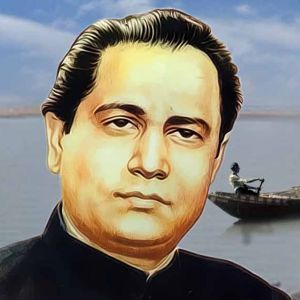
He was born at his maternal home in Shukhair. During his college days, he got involved with politics and joined the Communist Party in 1941. His parents, who were music lovers, became his inspiration to choose a career in the field of music. He was exposed to folk music at a young age when his family shifted from Sylhet to Mymensingh in the pre-independent era. He also received lessons in folk music from different gurus. He later learnt Rabindrasangeet from the prestigious Shantiniketan. His performance at the Banga Sanskrit Sammelan in 1955 earned him fame, and there was no turning back after that.
Pakhi Kakhan Ure Jay, Bhalo Koira Bajan Go Dotara, Tomar Mato Dayal Bondhu, Phul Gachhti Lagaichhilam, Loke Bale Bale Re, Sagar Kuler Naiya Re, Sohag Chand Badani Dhani, Pagol Hoiye Bondhu, Ami Bondhur Premagune Pora, etc., are some of his popular songs. He has worked as a reader in the Music Department at Rabindra Bharati University for a short period.
Nirmalendu Chowdhury – Some interesting and unknown facts
1. He got the opportunity to perform at the grand Bolshoi Theatre in Moscow in 1955 in front of Nikita Khrushchev, and he has won an international singing competition. He has performed worldwide in different countries.
2. He was chosen as one of the team members of the Indian Cultural Delegation sent to Eastern European countries by Pandit Jawaharlal Nehru.
3. He was fully involved with theatre, as a member of IPTA, where he wrote lyrics and composed many songs, apart from appearing as a stage actor for a few plays.
4. He set up Lok Bharati, a school for folk music in Kolkata, and has been actively involved with a few progressive organisations.
5. He has also sung Bengali film songs.
6. His son Utpalendu Choudhury has carried forward his legacy in Bengali folk music after his death.







Recent Comments