
M. K. Thyagaraja Bhagavathar, often addressed as MKT was one of the most celebrated stars of South Indian cinema, during the early talkies. He is widely regarded us the first superstar of Tamil cinema. Apart from gaining huge fan base for acting skills, he was equally appreciated for his singing talents. He was one of the earliest singing superstars of Indian cinema, who made a great impact on the audience. He was a Carnatic vocalist and an established stage actor too.
While he was the glowing star of the Tamil cinema, he was arrested and jailed for 3 years, accusing of murder charge. Though he returned to acting, most of his films didn’t work at the box office, and he died of ailments before he reaching 50. Bhagavathar’s name is always written in Golden letters in the history of Tamil cinema, and owns the title – The first superstar of Tamil cinema. He, along with Chinnappa started the culture of dual stars ruling the Tamil industry.
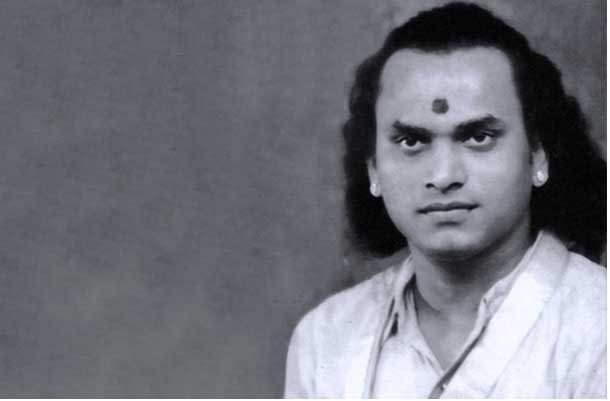
A theatre artist turned singer-actor in the late 1920s
M. K. Thyagaraja Bhagavathar was born as Thiyagaraja in Mayiladuthurai (then known as Mayavaram in British India) of present-day Tanjore District on 1 March 1910. He was born into a Vishwakarma family, who were goldsmiths in profession. He was the eldest son of Krishnasamy Aachari.
His family moved to Tiruchirappalli, where he was admitted to a local school. But he was not interested in studies. He wanted to become a singer. Those days, in the early 1900s, singing was not considered as an honourable profession and hence he didn’t receive support from his family. But when his talents got approved by public circle, his father started supporting him. With the approval of his father, Thyagaraja began to sing bhajans in local groups. He started his career as a classical singer and stage artist in the late 1920s.
Thiyagaraja joined the drama company of F. G. Natesa Iyer
He was first spotted by F. G. Natesa Iyer, a railway officer with South Indian Railways, Trichy, and very soon young Thiyagaraja joined Rasika Ranjana Sabha, an amateur theatre group started by the officer. He was only 10 when he was offered to play the role of Lohitadasa in his play Harischandra, with the permission of Thyagaraja’s father.
Though he started formal training in acting under several talented drama artists, Thyagaraja Bhagavathar was more passionate in singing than acting. Along with acting, he took formal training in Carnatic music from Madurai Ponnu Iyengar, an acclaimed violinist. He learnt for 6 years.
His performance in the Hindu mythological play “Pavalakkodi” opened doors to celluloid
While he was performing the lead role of Arjuna for the play, “Pavalakkodi” he was spotted by film director K. Subramaniam, and the businessmen Lakshmana Chettiar and Alagappa Chettiar. Alagappa Chettiar decided to make a film based on same play with the same title, he casted M. K. Thyagaraja Bhagavathar in the lead role. The movie became a hit and Bhagavathar’s filmy journey kicked off in 1934.
K. Subramaniam gave him the next opportunity through Naveena Sarangadhara (1935) based on a play titled, Sarangadhara. Bhagavathar produced his third film “Sathyaseelan” (1936) under his new film banner, Trichy Thyagaraja Films.
He rose to stardom in 1937 with Chintamani directed by Y. V. Rao
Chintamani was his biggest hit till then and he turned a star. It became the first Tamil film to run continuously for a year. His songs also became popular. Same year the film Ambikapathy made by the American film director Ellis R. Dungan hit theatres, and this film starring Thyagaraja Bhagavathar broke the previous records set by Chintamani. It had 210 minutes running time.
His next biggest hit was Thiruneelakandar released in 1939, where he played Saivite saint Thiruneelakanta Nayanar. Between 1934 and 1944, Bhagavathar acted in 9 films, and all became hits. He appeared in 14 movies total, during the period 1934 – 1959, and most of them broke collection records. Haridas, released in 1944, ran continuously for three years at the Chennai Broadway Theatre. Sathyaseelan (1936), Ashok Kumar (1941), Sivakavi (1942), and Haridoss were his major hits before his arrest. He sang in most of his movies, and his songs made him an immensely popular singer too. He mostly recorded mythological songs.
He was an unconventional hero, who took the Tamil talkies by storm and ruled Tamil cinema until 1944. A matinee idol from the past, no doubt, he was the first superstar of Tamil cinema, long before these terms really came into existence. Also read about Thikkurissy Sukumaran Nair, was the first superstar of Malayalam cinema, long before this term was coined.
A versatile singer who could sing high-pitch notes
Those days, long before playback singing came into existence, great singers with moderate acting skills were high in demand for playing lead roles. Right from his early days in cinema, Thyagaraja Bhagavathar gained recognition for his melodious voice. A trained Carnatic artist, he owns numerous popular mythological songs to his credit. His powerful and melodious voice played a magnificent role in grooming him as a superstar.
M.K.T. composed a few songs also. He frequently collaborated with lyricist Papanasam Sivan, and some of their best songs include – “Krishna Mukunda Murari”, “Unai Alaal”, “Radhe Unaku Kobam Aagadadi”, “Neelakanta”, “Amba Manam Kanindhu”, “Naatiya Kalaiye” etc.
The arrest that shook Tamil cinema
In 1944, M.K.T along with 7 persons including actor N. S. Krishnan and studio owner Sriramlu Naidu were arrested by British police. They were charged in the murder of Lakshmikanthan, a Tamil film journalist who was stabbed in Vepery, Madras, on 7 November 1944. He died the next morning.
Lakshmikanthan was a notorious criminal who had served seven years imprisonment in the Andamans for the crimes he committed. He wrote scandalous stories in several yellow magazines about influential people, which obviously caused him enemies. While director S. M. Sriramulu Naidu got released, M.K.T and Krishnan had to spent three years in jail until 1947. They were found to be innocent and acquitted. A Judicial Committee of the Privy Council verdict came in his favour. But the case is still unsolved!
After his release, his career declined. Yet he never stopped acting
Prior to his arrest, he was signed up to act in 12 more films. After releasing from jail, he acted in some of them. But he never achieved his career peak later. The arrest badly affected his career graph. He got less opportunities and new stars also rose in the industry. Most of his films failed at box office.
After his release though Bhagavathar wanted to give as many classical music concerts as possible, no other Sabhas except Tamil Isai Sangam supported him. His public image was that much tarnished, though he proved innocent in the court. He lost all his money and died in 1959 in penury. Bhagavathar died of complications from ayurvedic medication at the age of 49 on 1 November 1959.
During his last days, he was spiritual and did a lot of pilgrimage. During many such journeys, he invited his close friends also, though both his health and wealth were deteriorating. He suffered from blood pressure and diabetes, and used to take the insulin injection himself. While he was performing at a concert in Pollachi, a person offered him some Ayurvedic medicine to cure the diabetics. But the medicine aggravated his condition, and he rushed to Chennai and got admitted in General Hospital on 22 October 1959. He passed away on 1 November 1959. According to sources, he was first married to Kamalam and later to Rajam.
M. K. Thyagaraja Bhagavathar – Some interesting and less-known facts
1. His film, Haridas, released in 1944, ran continuously for three years at the Chennai Broadway Theatre, witnessing three consecutive Deepavali festivals. He was in jail when the movie had its long run until 1947. ‘Manmatha leelai’ and other songs from the film ruled charts.
2. Though Ambikapathy was a blockbuster, the movie was criticised for some intimate scenes between the lead pair – Bhagavathar and Santhanalakshmi.
3. For his first blockbuster hit, Chintamani, though his voice was used for singing in the film, the songs featured in the gramophone records didn’t have his voice.
4. His film Chintamani made a great impact on society back then. Housewives used to sing the song Mayaprapanchattil while preparing morning coffee and her husband would sing Rathey unakku kobam in response.
5. Apart from singing, he composed a few songs also. His association with lyricist Papanasam Sivan produced several hit songs.
6. He got arrested in a murder case during his peak times and his only successful films were Amarakavi and Shyamala. They were moderate hits, and rest films were flops.
7. He was a philanthropist who never helped others for publicity. Apart from performing music free for music concerts, he also staged drama & concerts to collect fund for World War II. He donated the collections for the Red Cross. Though British government wanted to honour him with the title, Divan Bahadur, he politely declined.
8. Many Tamil actors including MG Ramachandran, got their big breaks when MKT was in jail.
9. Though he had relations with political and influential leaders like Rajaji, Kamaraj, Annadurai, Chinna Annamalai and others, he never used it for his personal glory. He never wanted to actively enter politics, though he had brief connection with Congress.
10. After he was released from jail, audience didn’t want to see his films. It was sharp contrast to NSK, who was arrested along with him, but his films were accepted by audience.
11. After his release, he produced two films – Rajamukthi and Puduvazhvu, which he acted. Though he failed to bring audience to theatres, his songs still attracted the masses until his death and thereafter.
12. When Ambikapathi (starring Sivaji Ganesan) was produced in 1957, he was offered the role of Kambar. Though he was offered a remuneration Rs. 10,000/- more than what was offered to Sivaji Ganesan, he politely turned down the offer because he wanted to stay in people’s hearts as Ambikapathi forever.
13. The murder case for which M.K.T and Krishnan were arrested, is still unsolved, though these two actors were acquitted. It remains a mystery.
14. 2025 Tamil Movie Kaantha starring Dulquer Salmaan was rumoured to be based on the life of this iconic star, though makers denied it. But there are some similarities too.









Recent Comments