
Anger issues in children. Stubbornness in toddlers. Aggressive behaviour.
Have you been noticing these three emotional reactions more frequently in kids in recent times?
Are social media and cyber spaces paving way to anger issues in children? Are they the major reasons for this?
Here are the expert recommendations on how to control stubbornness in children up to six years old, anger issues in children up to twelve years old, and violent behaviour seen during early adolescence. Parents need not worry about the stubbornness children show up to the age of six. With love and gentle handling, it can definitely be corrected.
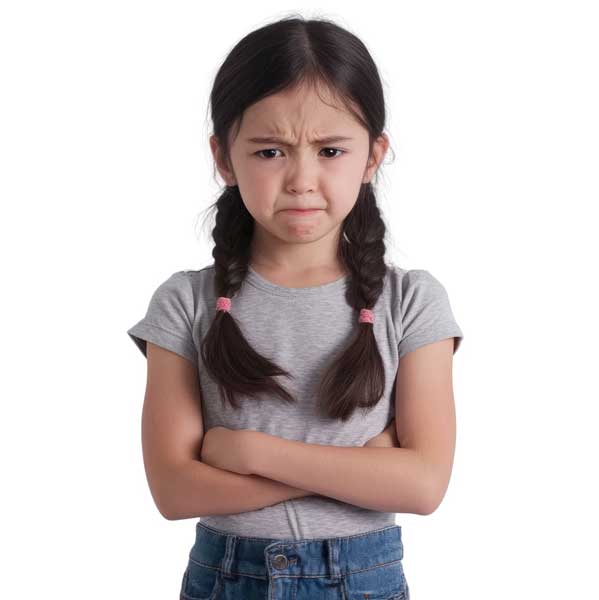
Love Medicine to handle anger issues in children
Children usually start showing stubbornness around the age of two. First, they start crying for reasons best known to them. Then comes protesting—rolling on the floor, clenching fists, and refusing things. If they don’t get what they want, the stubbornness increases. Everyone around will say, “How stubborn this child is!”
If there are no illnesses or other problems, this stubbornness is not wrong. In fact, it is proof that the child’s mental and physical development is on the right track. It is their way of asserting independence. They try to reach for toys, get stubborn when they can’t get them, and that stubbornness turns into anger. They try to walk, push away your hand when you hold them, and raise their voice. All these are signs of declaring their independence.
All these behaviours are signs of healthy mental and physical development. However, anger beyond normal stubbornness and its extreme expressions should be noticed. If intense anger-related behaviours increase before the age of six, it needs attention. If stubbornness leads to hurting themselves, throwing and breaking toys, troubling other children in class or people around —these need to be observed closely.
5 Ways to Reduce Stubbornness
Children generally show stubbornness between the ages of two and four. Anger issues in children are just common. By keeping five things in mind, the intensity of stubbornness can be reduced.
1. Ignore It When Needed
A child sitting next to you might pinch or hit the mother. In such situations, reacting by hitting back, scolding in front of others, or arguing will not give good results. Do not immediately pay attention to what the child is doing. Shift your attention elsewhere. Speak normally to someone else, making it clear to the child that you are not paying attention to them. Talk as if you do not even notice their presence. After a while, they will calm down on their own.
2. Scaring (mild startling):
A little bit of “startling” is the next method. You may roll a piece of paper and bang it on the floor, make a stern face, or create a sharp sound. Mild scare techniques can be used. But never use physical punishment. Let the child understand through your actions that parents did not like what they did.
3. When the child hurts themselves:
If the child tries to hurt themselves, you should not immediately give them what they asked. Instead, try the above two methods. Startling usually works better. If there is a situation where the child might get hurt seriously, intervene quickly and remove them from that place. Never hurt him intentionally. See it as a mild treatment only.
4. Do not agree to everything:
Do not fulfil every demand made through stubbornness. It slowly becomes a habit. Next time the child throws a tantrum, they will know the parents will give in. So they will repeat the same behaviour again and again, to get his things done.
5. When to allow:
If the stubbornness is due to a special circumstance, you may allow it. For example, a child who has a fever or cold may insist on silly things because of discomfort. At that time, respond with empathy. Similarly, children often show stubbornness before bedtime—that is normal. Parents should respond according to the situation.
Stubbornness is not shameful
When children show stubbornness in public or in front of relatives, people often interpret it as poor parenting. Then parents feel ashamed of their child’s behaviour. This leads them to develop anger towards the child. Do not keep that anger inside and behave harshly with the child. What you need to do is – find ways to stop the stubborn behaviour.
You must dislike the mistake, not the child.
When they do something wrong, show disapproval.
When they do something good, hug and kiss them lovingly.
Only when these situations occur, the child will understand what is right and what is wrong. Then they will not repeat the mistake.
When treatment is needed
When conditions like autism are present, stubbornness comes as part of their behavioural traits. The child may not be able to communicate with others, may not be able to do what other children do socially, and may always stay in their own closed world.
In such cases, developmental therapy is required. Excessive stubbornness and aggressive behaviours can be corrected through behavioural therapy. These issues must be recognized and treated by experts before the age of six.
Oppositional Defiant Disorder (ODD) is a condition where the child opposes everything. With proper treatment, this can be corrected. Otherwise, as they grow older, it may develop into personality issues. ODD is one of the reasons behind children turning into juvenile offenders.
Parents exploding in anger

Some parents explode in anger when they see their child getting upset. Seeing this, elders in the family may interfere and even scold the father or mother. The child’s temper is often labelled as poor upbringing, and the blame is quickly placed on the parents.
But from the parents’ side, there are many pressures they go through in their daily life — work stress and various personal struggles. Because of this, during moments like these, their internal pressures may burst out, and that is natural. Still, parents must try to control such outbursts.
However, if such an outburst happens, do not scold or correct the parents in front of the child. Even if the parent’s reaction was wrong, it should not be pointed out in front of the child. Handle it separately and explain it later.
Parents can show anger, but…..
In kids of age group, 6-12, stubbornness and tantrums are just common. It can lead to anger. To get rid of anger issues in children, there are a few measures.
Feeling angry is a natural emotional expression. However, one should get angry only for valid reasons, towards the right person, in the right situation, and in the right amount. Any anger beyond this controlled limit becomes harmful.
Children begin to show their natural temperament much earlier than we think, by observing and learning from their parents and surroundings. This can be noticed even before they turn one. Getting stubborn over small matters, crying continuously when they don’t see their mother — all these can be called nature in kids.
Similarly, the environment in which a child grows influences them. Just like a plant is affected by the nature around it, a child’s behaviour is shaped by the circumstances in which they grow. This is called nurture.
It is the combination of nature and nurture that determines whether a child grows up to be short-tempered or calm-natured. The age between six and twelve is very important for developing discipline in life. Any excessive anger shaped by the child’s growing environment must be identified at this age, corrected, and guided properly by elders.
The attitude of “let children do whatever they like” needs a gear change. That does not mean forcing them to walk in a rigid line. Instead, children must understand: “In my home, there are certain rules and routines, and I should follow them.”
Three Factors Influencing Anger
1. Home environment:
When children grow up in an atmosphere with a father, mother, grandparents, older siblings, and peers, and receive good-quality parenting, their brain develops better emotional regulation. Along with nature, a bond with pets, and emotional closeness with them, can also help improve a child’s emotional circuits as they grow. Emotional balance protects children from excessive anger.
2. Conditioning:
In some situations, parents turn a child’s anger into a “big event” or even glorify it. Expressions like “You got your father’s anger exactly” or “Just like your grandmother, you get angry quickly” might be misunderstood by the child as praise. They may feel that their anger is being approved and encouraged. When this becomes a habit, it can lead to excessive anger.
3. Escalation of Anger:
When a child gets angry, some parents respond with double the anger. Children may then see this as a method to trigger their parents, and show more anger. Thus, a chain reaction begins—from child to parent, and from parent back to child, which only gives negative energy to the atmosphere where they live together as a family. As the anger bounces back and forth, it keeps escalating. This chain must be broken.
What to Do When a Child Shows Anger
1. Let it go:
When a child gets angry, do not react immediately. Ignore it for a while or pretend not to notice. Do not react or mock them in front of others. Once you realize the anger has subsided, calmly explain that what they did was wrong and should not be repeated. Say it firmly and seriously.
2. Make them take responsibility (Response Cost):
The child must take responsibility for showing excessive anger. To help them realize this, give corrective consequences by restricting something they like. For example:
Don’t allow a favourite toy for a day
Cancel playtime for the day
Cancel a promised outing to the movies or park because of their outburst
These types of disciplinary measures are better than physical punishment.
3. Time-out:
Make the child sit separately until their anger cools down. Do not try to talk to them during these hours. Speak to them only after they are calm, and not in a lecturing tone.
Medical Conditions Related to Anger

Attention Deficit Hyperactivity Disorder (ADHD):
The child is unable to sit still. Their ability to control movements is reduced. Excessive emotional reactions, impulsive responses without thinking, getting angry even over trivial matters, and severe reactions—all can be seen in children with ADHD. Studies show that around five percent of children have ADHD. If needed, they should be given medication and behavioural therapy. In classrooms too, children should not be portrayed as “troublemakers”. Instead, teachers should understand that these behaviours arise from differences in brain functioning and respond accordingly.
Depression:
Depression is also seen in children. Anger issues in children may be a part of it too. They may show anger, irritability, sadness, or sulking even for small reasons. Irritability can also occur as a side effect of certain neuro-medications.
Autistic Spectrum Disorder:
These are mild issues associated with autism. When a child is suddenly moved away from something they like, they may find it difficult to accept the change and may have emotional outbursts.
Oppositional Defiant Disorder (ODD):
Some children deliberately show disobedience. They constantly argue with authority figures. They mainly show anger and defiance towards parents and caregivers. All these conditions and anger issues in children must be identified and treated before the child turns twelve.
Influence of Social Media
Toxic or harmful media can make children more short-tempered. At this age, children’s brains absorb things very quickly. Social media, online games, and similar digital content can strongly influence young children.

Constant exposure to fast-paced games creates an expectation that everything must happen instantly. When that doesn’t happen, they feel disappointed — that disappointment quickly turns into anger issues in children. Over time, children may reach a stage where they cannot handle anger or failure.
Children below six years should be kept completely away from digital devices. Up to twelve years, digital use should be allowed only under strict parental control.
Stop Violence
Violence in adolescence is a content of newspapers these days. Instead of blaming, we should choose alternatives including, trying to find the reason behind it and addressing it. Anger issues in children should be properly addressed.
Three Decades of Change — How Lifestyle Shift Increased Aggression
Over the past three decades, the lifestyle changes among humans have been closely linked to increasing aggression. Before the digital revolution, people found happiness through togetherness. Social interactions, gatherings, and outdoor games were gateways to joy.
But today, no one needs to go out or meet others to feel happy — a single digital device is enough.
As people started distancing themselves from human interactions, empathy and compassion reduced. Understanding others’ emotional states and responding accordingly has declined. Human nature itself has become more impatient and impulsive, which often lead to anger issues in children and adults — a direct outcome of changing lifestyles.
The previous generation had to wait for everything.
If they wanted to watch a movie, they had to reach the theatre early and stand in a queue to get a ticket.
If they wanted to express love, they had to write a letter and wait for the reply.
Today, everything is at our fingertips.
When a desire arises, it is fulfilled instantly.
Earlier, we had to wait — and there was no guarantee that the desire would come true.
Now, one click is enough.
If things don’t go the way we want, the brain gets no time to adjust to a “no.”
Without that adjustment time, people react excessively when things don’t happen as expected — and this becomes anger.
Excessive use of digital devices reduces coordination between the left and right hemispheres of the brain, lowers attention span, and increases anger, impulsiveness, and aggressive behaviour.
The Economic Survey presented in the Indian Parliament along with the Union Budget also highlighted that excessive screen exposure in children is increasing irritability and aggression, anger issues in children — and that this is becoming a significant public health concern.
5 Ways to Prevent Anger From Turning Into Violence
Here are five methods to control sudden anger issues in children and stop it from escalating into violent behaviour:
1. Walk Away Immediately
The moment you realise you are getting angry, leave the place as quickly as possible. Try to distance yourself from the situation that is triggering the anger.
2. Distract Your Mind
Do something that shifts your mind away from the situation. Count backwards from 100 to 1. This helps the mind to detach from the trigger.
3. Drink Water
Drink two glasses of water continuously. It reduces the excessive production of hydrochloric acid and lessens restlessness.
4. Deep Breathing
Sit somewhere quietly and take deep breaths. Then slowly exhale. Repeat this ten times.
5. Talk It Out/Discuss
Talk about the incident with someone close to you. While listening to them, avoid blaming or reacting harshly — listen patiently.
Online Games That Trigger Anger
Online games can contribute to anger and violent tendencies in children. Multilevel online games often contain fast-paced and aggressive visuals. The thrilling, high-tension experience until the very last moment can influence children. When they participate continuously, they may start imitating what they see, and anger becomes more frequent. As anger increases, it can turn into aggression.
Teenagers exposed to extreme violence in movies may also feel tempted to imitate it. Toxic Masculinity Also Affects Young Minds, especially teenage boys. Ideas like: “Men don’t cry”, “Men shouldn’t seek help for emotional problems”, “Boys must always be tough”, “Getting angry quickly is normal” – These ideas enter their minds easily.
When their favourite heroes are angry and aggressive, children start imitating them. This can lead to violence.
Parenting Styles That Can Lead to Anger and Violence
Both extreme parenting styles can create problems:
1. Neglectful Parenting
Where all of the child’s wishes are denied without understanding or emotional support. This makes the child frustrated and angry.
2. Over-Permissive Parenting
Where every wish is fulfilled. When children get everything instantly, they cannot tolerate delays. When something is not given, anger arises, and if this continues, it can turn into aggression. Denying all of a child’s desires can also turn their anger into violent behaviour.
Instead of either extreme, parents should practise a parenting style that gives the child the necessary freedom, provides experiences rather than just instructions, and guides them forward.
At home, there should be open communication — a space where the child is heard, where their thoughts and feelings are listened to, and where they are included in discussions.
When such an environment exists at home, much of the anger issues in children and violent tendencies seen during adolescence can be controlled to a good extent.
Anger Control Workbook

Controlling long-term anger issues in children:
1. Preparation (Anger Diary)
Create an anger diary (a workbook to track anger).
Activity:
Every day before going to bed, note down when you felt anger and its causes in detail.
Write what you thought and did during your anger.
Include both the positive and negative effects of your anger.
2. Skillful Analysis
Activity:
Determine whether the anger was useful (a virtue) or useless (a vice).
If it was useful, write “useful”; if it caused harm, write “useless”.
If your anger caused harm, write what should have been done instead.
Example:
If someone teases you, instead of reacting in anger, you can ignore what they say and continue talking to others or smile lightly. This way, the person teasing becomes irrelevant.
3. Practical Application
Activity:
Using the notes from steps 1 and 2, identify when anger occurs and what should be done.
Apply the solutions you have written in similar situations in the future. This helps build self-confidence to overcome anger.
Summary:
Diary → Record the causes of anger.
Analysis → Determine if it was helpful or harmful, and find better alternatives.
Practice → Apply the solutions in real situations to control anger.
Read a few topics related to child care and pediatrics. Click here.







Recent Comments