
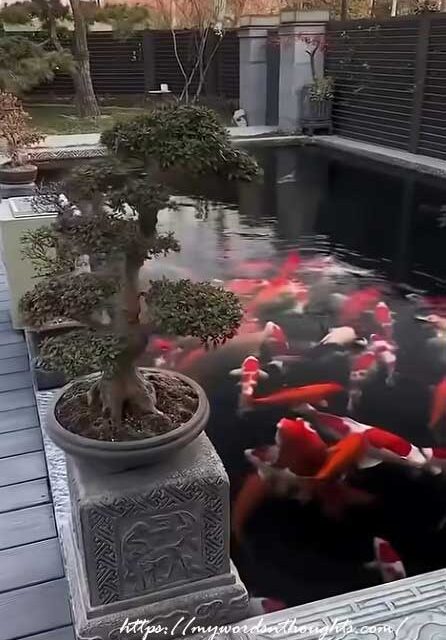
Koi Pond – the new addition to home exterior/interior. Creating a peaceful atmosphere with water oasis is currently trending. Let’s see how to set up this new trend of Koi Pond, an ecosystem that beautifully blends greenery and decorative elements.
Plants, trees, and fish—all of these should come together to create a natural ecosystem at home, along with a beautiful water oasis – A relaxing spot centered around water. It makes the atmosphere live. From this very idea came out the trending concept of having a decorative fishpond at home. Koi ponds with lively koi carp jumping and gliding around, have now become a part of modern homes. More than just visual beauty, koi ponds also help improve the mental wellness and health of the residents.
Where should the planning begin?
If you are planning to build a koi pond inside the house, inform your engineer or architect early. If the tank is planned on an upper floor, the structure must be reinforced to bear the extra load of water. When the koi pond is part of the landscape or courtyard, construction can begin during the wall-plastering stage. You need one water inlet point and one electrical point near the pond—these provisions must be arranged in advance to avoid future complications. Also read: How to build Island Garden for your landscape?
Size of the pond matters
You can build a koi pond inside or outside the house. A minimum pond size of about 5 × 3 feet is required for koi carp to swim freely. A depth beyond 2.5 feet can be risky, especially in homes with young children. Even if you don’t have small children, remember that guests visiting your home may bring kids too.
The beauty of a koi pond truly stands out when there are more fish in it. There should be provision to add more fish in future, if you want. In smaller tanks, fish don’t grow well because of limited space. As the size of the tank increases, the fish also grow larger. That is why it’s important to allocate the maximum possible space for a koi pond.
Concrete tanks are the best option for homes. However, once built, removing or breaking them later is difficult—this is their disadvantage. Increasing the size or pond renovation are other risk factors. Using a pond liner (a polythene sheet) is another option, but when used for a koi pond, the increased water pressure can cause cracks or tears. It also lacks visual appeal.
Tempered-glass aquarium-style koi ponds suit interior spaces well. Concrete tanks can also be built inside courtyards to raise fish. If it’s your interior, then there is no other option left except to construct a strong tank.
Filtration is crucial
Since fish feed and waste frequently mix into the water, proper filtration is extremely important for your Koi Pond. You can use ready-made filters available in the market; these usually include UV filtration as well. You can also create a natural multi-layered filtration system using charcoal, ceramic rings, bio balls, sponges, and cotton wool. Most important – the filter should never be switched off.
A koi pond requires one water inlet and two outlets—one for the filter and one for draining out. Since the same water is continuously circulated, there is generally no need to change the water frequently. Lava rocks available in the market can also be used in the filtration system. UV filters are not usually necessary, but for outdoor ponds that are exposed to direct sunlight, installing a UV filter is recommended.
A Natural Look Is Essential
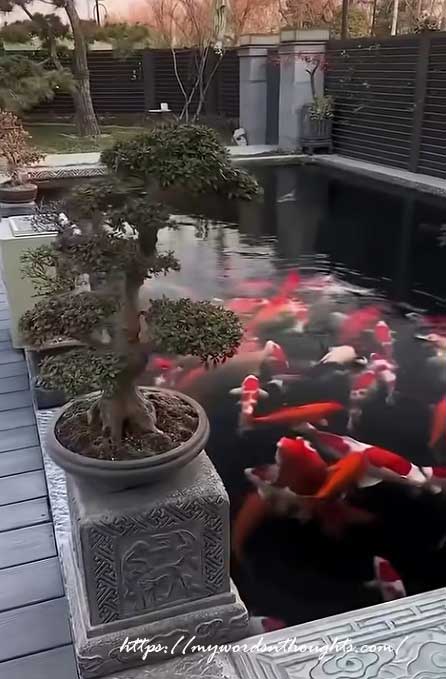
The trend today is to design the pond in a way that blends beautifully with nature. Plants, rocks, pebbles, and a natural-looking waterfall should all be part of the Koi Pond design. Along with using real stones, it is also common to create rock-like structures using cement. Then you can paint them with colours to resemble natural rocks. A large pond is required to create a waterfall feature, but small ponds can be beautified using pebbles and plants.
Ferns are one of the popular plant choices for koi ponds. Water-loving plants such as water poppy, japonica, water lily, water lettuce, water moss, foxtail plant, water mosaic, duckweed, and others are commonly used. The oxygen these plants release is used by the fish, and the fish waste is in turn used by the plants—creating a natural balance. Sculptures designed specifically for ponds are also available in the market. You can buy them in different price ranges.
Colourful Koi Carp
Koi carp are the fish typically bought for ponds. Apart from Indian varieties, more than 15 types – Chinese, Japanese, and others are available in the market. Foreign koi have richer colours, but they are expensive. As the size of the fish increases, the price goes up as well. Fish become healthier and more active when the water keeps moving, so it is important to have a water-circulation system. The quantity of fish feed should be neither too much nor too little. It is ideal for one member of the household to take consistent responsibility for feeding the fish.








Recent Comments