
There are many popular devotional songs of Guruvayur Krishna. Though most of them are very familiar to all Malayalis, do you know the story behind them? Earlier, I posted on ‘Oru Neramenkilum’ song. Read that interesting article here. Through this column, I shall tell you the story behind a few more Krishna songs. The creators of these songs indeed believe it to be the blessing of Lord Krishna. Yet we can’t ignore the hard work of the lyricists, composers, and voices behind these songs, listened to by Malayalis for several decades. These songs always stay evergreen.
You can enter the Guruvayur temple through any of the four doors. The streets are filled with shops, and Krishna’s devotional songs are heard always, creating a bhakti mood in the air before you reach the temple. Most of the songs are Krishna’s favourite too. Let us go through the experiences behind the creation of quite a few Guruvayurappa songs.
Stories behind the popular songs of Guruvayurappan
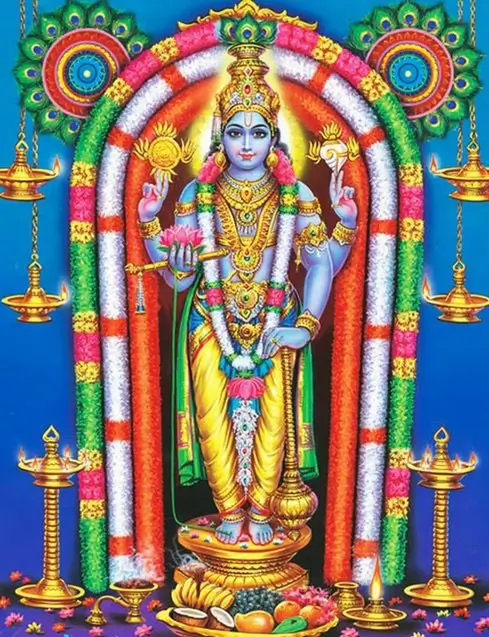
Chembaikku Nadam Nilachappol
Music director Jayan used to perform in concerts along with his brother Vijayan. After his brother’s untimely death, however, he lost interest in both singing and stage performances. Around that time, he came to know that K. J. Yesudas had reached Thiruvananthapuram. Hoping to overcome the grief of losing his brother, Jayan decided to meet the singer in person.
During their conversation, Yesudas casually suggested, “Why don’t we do something? Ramesan Nair is here. Let’s ask him to write songs on Guruvayurappan. I’ll sing, and we can release it as a cassette.”
That very evening, Jayan visited Ramesan Nair at his residence and shared the idea. Nair was overjoyed. He immediately sat down to write and composed nine beautiful devotional songs in one stretch. Not a single line needed correction or rewriting, which left Jayan astonished. He tuned all the songs instantly. Immersed completely in the mood of bhakti, they lost track of time, and by the time the work was completed, it was already 4 a.m. They firmly believe that the presence of Lord Krishna guided the entire process, which is why all nine songs from Mayil Peeli remain equally popular even today.
There is a well-known song, Nakshatradeepangal Thilangi, from the Malayalam film Nirakudam. In its second stanza, the line “Chempada thalathil Shankarabharanam” is rendered in Yesudas’ voice at double speed—a technique composers refer to as Katriswaram. The same technique is used again in the anupallavi of this devotional song as well.
Ramesan Nair has penned more than 1,000 songs exclusively dedicated to Guruvayurappan and has been associated with around 405 devotional albums. Even while writing about the same deity, he consciously brings varied emotions and moods to each composition.
Brahma Muhoorthathin Sankholi Uyarnnu
Perumbavur G. Ravindranath composed this very popular devotional song dedicated to Lord Krishna. It was the first Krishna album tuned by the composer, and Brahma Muhoorthathin Sankholi Uyarnnu was the very first song he composed for the album. Coincidentally, he got the opportunity to release cassettes dedicated to Lord Guruvayurappan and Chettikkulangara Bhagavati at the same time. The composer believes that the combined blessings of Lord Krishna and Bhagavati are the reason why this song became immensely popular among devotees.
It was his friend P. G. Menon who initially suggested the idea of creating a devotional album dedicated to Lord Krishna. The lyricist of this song, Thankan Thiruvattar, was writing songs for AIR during those days. Ravindranath and Thankan knew each other earlier, and the lyricist handed over a few songs to him. Around the same period, Kaithapram Damodaran Namboothiri used to visit Akashvani occasionally, and he also requested Ramesan Nair to contribute a few songs.
While Ravindranath could easily tune most of the songs, this particular one posed a challenge. In Carnatic music, Suruti raga is traditionally used for Mangalam. Since the song described the Nirmalyam of Lord Krishna, only Suruti raga lingered in the composer’s mind, leaving him confused about how to proceed. Somehow, he managed to breathe life into those lines, and they eventually turned out beautifully. Later, he went on to compose around 35 albums dedicated to Guruvayurappan, and it all began with Panchajanyam—the album that included Brahma Muhoorthathin Sankholi Uyarnnu.
When Ravindranath asked Thankan Thiruvattar to write two songs on Lord Krishna, the deeply devoted lyricist ended up writing six. A regular visitor to the Guruvayur Temple, Thankan asked the composer to choose any two from them. However, when the Panchajanyam album was released, five of his songs were included.
When Thankan received the request to write the lyrics, it took him more than a week to attain the right devotional mood. One late evening, around 10 p.m., a few lines suddenly flashed in his mind, and he jotted them down on a piece of paper. After completing eight lines, he couldn’t proceed further and went to sleep. During those days, he regularly visited the Thiruvattar Adi Kesava Perumal Temple. Located on the banks of the Paraliyaar River and on his way home, the Thiruvattar Palace was a place where he often paused. One such time, as he sat in front of the palace after a temple visit, a few more lines came to his mind, and he completed the charanam of the same song.
The song was finally recorded in the magical voice of Unni Menon.
Guruvayur Omana Kannanaam Unnikk…
M. Jayachandran, who composed this song, had been visiting the Guruvayur Temple since his childhood. For one reason or another, he managed to visit the temple at least once a month, often unplanned. It was singer K. S. Chithra’s husband, Vijaya Shankar, who proposed the idea of producing the devotional album Unnikannan. At that time, Jayachandran was an unknown face in Malayalam cinema, and all the discussions related to the album took place at Chithra’s home.
Chowalloor Krishnankutty, of Oru Neramenkilum fame, sent the lyrics for the song, beautifully portraying mischievous Krishna through his words. When the composer read those lines, his eyes filled with tears of devotion, and he tuned the song instantly. Later, the same music director rose to prominence through the Krishna songs he composed for Nivedyam, and there was no looking back after that. He firmly believes that this success was the blessing of Lord Krishna.
The song was recorded in the sweet and soulful voice of K. S. Chithra.









Recent Comments