
Very often, we forget about our feet, which support our entire body while standing and moving. When they touch the ground, they come into contact with soil, water, mud, and all kinds of dirt. As our feet receive less attention, we tend to neglect their care. If feet are not properly cleaned and maintained, they can develop fungal infections and other ailments that cause itching and pain, affecting our overall mood. Foot care is very important.
A small step can make a big difference, and foot care begins with simple, everyday habits. Your feet need equal care, just like your face and hands. Foot care is also an essential part of personal hygiene and helps improve our confidence. Through this column, I shall address five common doubts related to foot care and beauty.

5 Common Foot Care Doubts
What are the reasons for the colour change of nails?
Deficiency of vitamins, tight shoes or sandals, fungal infections, wounds, and diseases can adversely affect nail health. Most of the time, these problems become visible through changes in nail colour. Iron deficiency can also lead to nail breakage and colour changes. In fact, changes in nail colour can indicate certain deficiencies or diseases. If nail infections are not treated in time, they can lead to permanent nail damage that cannot be reversed.
When you are treating some infections, you can’t expect quick results. You need it to wait at least 3 to 6 months to get the desired results. When it comes to coloured and infected nails, new nail should grow, to see if the condition still prevails and that is why it takes a few months. The damaged part of the nail is not cured most times, and it needs to grow. Even after growing, if the nail shows same condition you need to take extended treatment we can last for a few months. You need it to apply medicines and lotions, and take extra care of your nails. You may need to take medicines too, for a few months.
When I notice a colour change of nails, who should I consult?
Skin doctor or a specialist related to foot diseases, who to consult first? Some departments in the health sector can overlap, and that’s why every common man has this doubt. If the problem is simple, you can consult a skin specialist. As the problems are related to feet, you can consult a podiatrist too, who is specialised in diagnosing and treating conditions related to the feet, ankles, and lower limbs. Along with nails, if you have health issues with other parts of the feet, it is appropriate to consult a podiatrist.
Can diabetic patients do a pedicure?
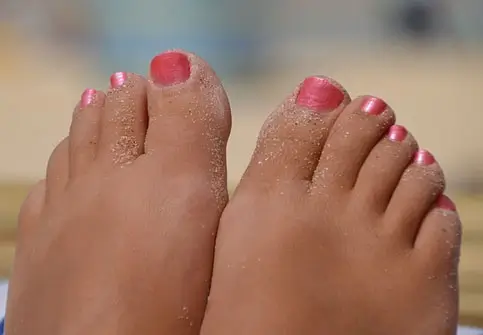
A pedicure can be done by everyone, but diabetic patients need to be cautious. People with diabetes often have reduced sensation in their feet, so they may not feel heat properly, even if the water temperature is high. While removing dead skin or trimming nails, extra care should be taken to avoid injuries. As they have less sensation, they may not easily identify wounds and infections. It’s always better to tell the professional in the salon before starting the procedure.
What is Spider veins? Is it a serious condition?
Spider veins is common in pregnancy and soon after delivery. Nerves will budge out and can be seen with a slight colour change. When blood circulation to the feet decreases, it can lead to this condition. Impure blood from feet can find it difficult to reach the heart. When impure blood is stuck in feet, it causes a colour change. Its next stage is varicose veins.
When changes occur in a nerve and it becomes prominent or bulges out, the surrounding skin also gets affected. The skin may appear unhealthy, develop ulcer-like lesions, and may even bleed. If you have spider veins, your skin needs deep moisturization. Apply a moisturiser regularly to help retain the skin’s elasticity, and follow a healthy lifestyle.
A person with this condition may find it difficult to stand for long periods. If their job requires prolonged standing, it can lead to a condition called Restless Legs Syndrome (RLS), also known as Willis–Ekbom disease. The person may experience uncomfortable sensations such as crawling, tingling, or pulling in the legs. Such individuals need adequate rest and prompt medical attention.
Diabetic patients vs non-diabetic – Feet problems
Diabetic patients are more prone to foot-related health issues than non-diabetic individuals. If diabetes is not well controlled for a long time, it can affect the nerves of the feet. This condition is called diabetic neuropathy, in which the patient may fail to sense pain, infections, or discomfort in the feet.
Suppose two people are walking a long distance together, and one person is affected with diabetic neuropathy while the other is normal. After walking a certain distance, a non-diabetic person may feel pain in the legs and stop walking. The person suffering from diabetic neuropathy won’t stop, and he may not even notice if his feet get injured. He may not even feel pain walking long distances, because his feet are almost in a frozen state. Injuries/infection may be noticed when it reaches the next stage. By that time, the feet might be in a pathetic condition, and it takes a long time to cure.
The numbness caused by diabetic neuropathy usually affects the area up to where socks are worn. When the pain starts spreading above this level, the patient will begin to notice it. Ulcers in the feet are also common in diabetic neuropathic patients. They should use well-fitting footwear wherever they go, including inside the home.
There is another condition called diabetic arteriopathy. In this condition, blood circulation to the legs is reduced. As a result, wounds take a longer time to heal. People with this condition should also take special care when choosing their footwear.
What are Foot Manners?
Have you noticed certain types of footwear with a narrow front shaped like a “V”? While this type of sandal may look stylish, the toes do not have enough space to move freely. If this becomes a habit, it can cause foot problems in the long term.
To maintain foot health and beauty, experts recommend following proper foot-care practices. These are simple habits that we need to adopt to maintain healthy feet. A few such points are mentioned below. Also read: Best shoes for feet.
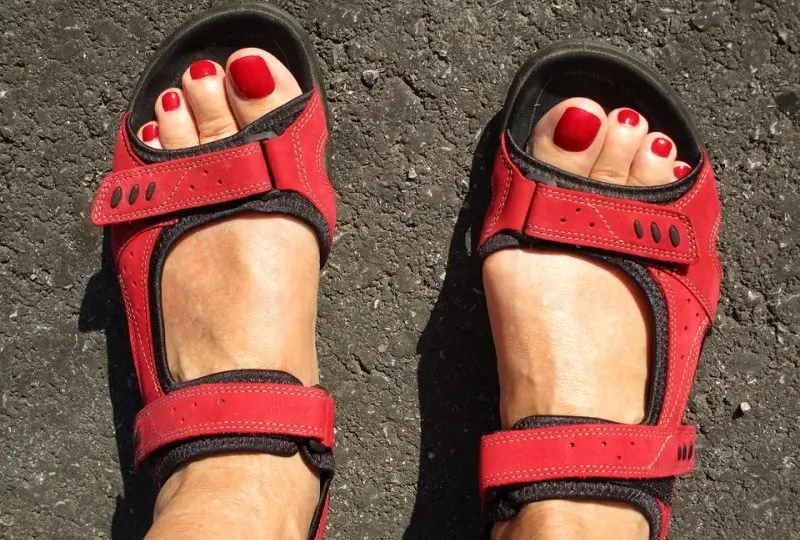
Hygiene
To maintain healthy feet, some basic hygiene principles are sufficient. Clean your feet every day and remove moisture completely. Toenails should be trimmed straight across, without cutting into the sides. Clean the spaces between the nails regularly to remove dirt and dead skin, keeping them neat and hygienic. This helps prevent ingrown nails and infections.
Foot care
Beauty treatments like a pedicure can help you to maintain your feet properly. It removes dead cells and makes your skin soft and radiant. It can also prevent infections to a great extent. But never overdo it. To avoid making the skin too sensitive, do pedicures only occasionally. If you have dry skin, skin care is a must, especially with a nourishing moisturiser or baby oil. It’s always advisable to start skin care before your skin starts to age.
By the time you reach mid-30s or early 40s, your skin begins to lose elasticity and moisture. Hence, skin care at this age is a must, not just the case of feet, but also your face and whole body. It can prevent skin ageing to a great extent. Use only footwear which perfectly fits your feet.
Proper air circulation
During the hot summer, it is not advisable to wear socks and shoes full-time. Maybe it is a part of your job or academic studies. But too much sweat trapped inside the socks can lead to infections and other problems. Hence, after long hours, you need to give proper attention to your feet & nails and ensure better blood circulation.
Also read other topics on footcare. Click the links to read









Recent Comments